
Good to Know / Water damage and reconstruction
Water Damage Cleanup: What to Do Before Rebuilding
Water damage cleanup starts with safety, stopping the source and arranging the right mitigation help. Removing the visible water is only one stage. The affected materials also need assessment, cleaning and structural drying before new drywall, flooring or cabinets cover them.
If the emergency work is finished and your home needs repairs, Bezruchuk Inc.’s Washington water-damage reconstruction service covers the rebuild. We coordinate damaged kitchens, bathrooms, floors, walls and connected finishes after mitigation and drying are complete.
This guide explains the sequence, the risks of waiting and what to have ready for a reconstruction estimate. The photographs show completed Bezruchuk Inc. projects following water damage.
01 / First steps
What should you do first when you find water damage?
Start with the condition of the home, not a shopping list of pumps. A small spill on an accessible surface is different from water inside a wall, a saturated floor or a room affected by outdoor flooding.
- Keep people away from hazards. Do not enter standing water to reach a breaker or operate electrical equipment. Call an electrician if power cannot be isolated safely. Leave if you suspect a gas leak or structural danger.
- Stop the water source when it is safe. For a plumbing leak, use an accessible shutoff and arrange the necessary plumbing repair. For a roof or exterior leak, have the entry point assessed.
- Arrange appropriate mitigation help. Standing water, sewage, widespread saturation or inaccessible damage calls for experienced cleanup professionals. Keep children and pets away from affected areas.
- Record what happened. From a safe location, photograph affected rooms and materials. Keep dates, invoices and the mitigation company’s findings for the repair plan.
The CDC’s disaster cleanup guidance covers electrical hazards, contaminated floodwater and carbon monoxide risks. Never run a fuel-powered pump or generator inside a home, basement or garage.
You can contact a reconstruction contractor while gathering information, but that does not replace emergency mitigation. The contractor needs to know whether active water, drying or contamination is still being addressed.
02 / Why delay matters
The risks of postponing water damage cleanup
A puddle disappearing does not tell you what happened beneath a floor or behind a cabinet. The visible stain may be smaller than the area that needs investigation. Waiting can also make the eventual construction scope harder to define.
Moisture and mold
EPA advises drying water-damaged areas and items within 24 to 48 hours to help prevent mold. Treat that as a reason to act promptly, not a promise that an entire structure will be dry in two days. If water was present before you discovered it, the exposure period is already longer than the time since your first photograph.
Damaged building materials
Look for swollen cabinet panels, separating flooring, soft subfloors and damaged wall finishes. These are assessment clues, not a reason to assume every material must be replaced. The reconstruction scope should identify what can remain, what needs repair and what cannot provide a sound base for the new work.
Hidden problems after cosmetic repairs
Painting a stain or covering a wet floor can leave the original problem unresolved. EPA advises cleaning mold and drying surfaces before painting or caulking. Its homeowner mold and moisture guide also recommends professional help for contaminated-water damage and suspected hidden mold.
03 / Cleanup and drying
Water extraction, cleanup and structural drying are different jobs
Extraction removes standing water. Cleanup addresses affected surfaces and materials. Structural drying addresses moisture remaining in the building assembly. A pump alone does not perform all three jobs, and buying a larger pump does not establish that the home is ready for repairs.
Ask the mitigation company to explain its findings and handoff:
- Where did the water travel, including adjacent rooms and the area below?
- Which materials were removed, and which were retained?
- What cleaning or remediation was required?
- How was drying progress checked, and what records are available?
- Are there unresolved conditions the reconstruction contractor needs to inspect?
A dehumidifier running in a room is not proof that every layer beneath the flooring is dry. The handoff should describe the affected assemblies, the work performed and the condition of the areas being released for reconstruction.
Do not reinstall cabinets or insulation simply because equipment has been removed. Request confirmation of the drying status and any remaining work. That information helps the rebuilding contractor plan the next stage instead of discovering an unresolved issue after finishes are ordered.
04 / Ready to rebuild
When can reconstruction begin after water damage cleanup?
The home is ready for reconstruction when the source has been corrected, mitigation and necessary remediation are complete, and drying has been documented. The repair contractor then reviews the exposed conditions and defines the construction work. A clear handoff reduces uncertainty for everyone.
What the reconstruction estimate should cover
- Underlying repairs: framing, subflooring or other supporting materials identified in the assessment.
- Systems: plumbing and electrical work that must be repaired, inspected or reconnected.
- Room finishes: insulation, drywall, flooring, cabinets, counters, tile, paint and trim included in the scope.
- Connections to adjoining rooms: floor transitions, continuous surfaces and matching difficulties.
- Selections and schedule: materials, lead times, trade coordination and applicable permits.
Photographs, measurements, mitigation records and a list of affected rooms help make an estimate specific. The cost depends on what needs rebuilding, not only the square footage that was visibly wet.
Separate necessary repairs from optional improvements. A new layout, a different cabinet line or upgraded finishes may be sensible during reconstruction, but each choice should have a defined scope and price. Any insurance coverage or payment decision belongs to the homeowner and insurer; a contractor’s estimate does not guarantee reimbursement.
For the sequence from dry-out through finishes, see our flood-damage repair timeline guide. Individual project durations depend on conditions, selections and material availability.
05 / Real project examples
What happens after cleanup? Two completed rebuilds
These projects show the construction work that follows mitigation. They are examples of particular homes, not a standard price or schedule for every water-damage repair.
Deer Ridge, Puyallup: a kitchen rebuilt after drying
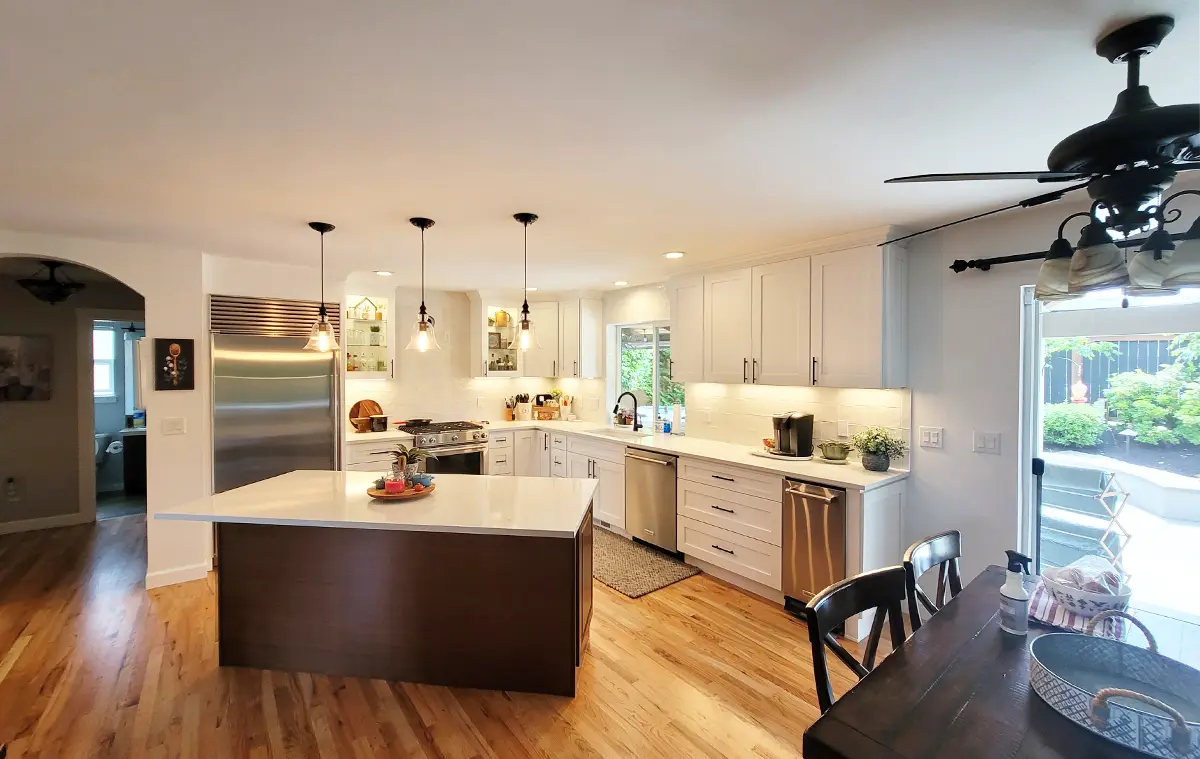
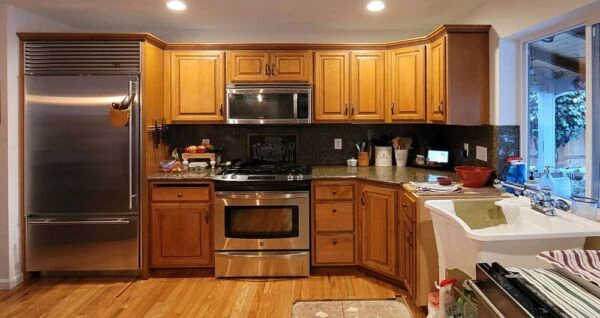
In our Deer Ridge kitchen water-damage reconstruction project, another company completed mitigation and drying before Bezruchuk Inc. began rebuilding. Damaged cabinetry and flooring had been removed. Because the original cabinet line was discontinued, matching only a few replacement sections was not a practical solution for this kitchen.
The reconstruction included white shaker cabinets, a contrasting island and hood, quartz counters, a tile backsplash and hardwood repair and refinishing. The wood flooring also extended into the living area. This is why a kitchen rebuild needs a coordinated plan for the room and its connected finishes.
A primary bathroom rebuilt after a failed supply pipe
Our master bathroom rebuild following water damage began with a failed CPVC supply pipe. The bathroom was stripped back for repairs, the supply piping was replaced with Uponor PEX, and the layout was reconsidered before new surfaces were installed.

The completed work brought together plumbing changes, the specified shower waterproofing assembly, stone tile, a charcoal floor, new fixtures, lighting and surrounding wall finishes. The project illustrates the value of resolving the cause and planning the underlying work before focusing on the final appearance.
06 / Prevent repeat damage
Use the repair to address the original cause
Before closing the walls, ask what failed and how the proposed repair addresses it. Keep the explanation with the project records so future maintenance is based on what actually happened in the home.
For a plumbing failure, discuss the affected supply or drain components with the plumber. For a shower leak, review the waterproofing assembly, drain connection and penetrations. For water entering from outside, have the relevant roof, drainage or exterior condition assessed rather than relying on a new interior finish.
After reconstruction, keep shutoffs accessible and check repaired areas during ordinary use. Leak sensors near suitable appliances or fixtures can provide an early warning, but they do not replace inspection or repair. Save photographs of concealed work, product information and maintenance instructions where you can find them later.
If a musty smell, new stain or recurring dampness appears, arrange another assessment. A completed rebuild should be followed by care for the repaired area, not a return to ignoring the original warning signs.
07 / Common questions
Questions homeowners ask about water damage cleanup
Can I handle water damage cleanup myself?
A small, recent spill on an accessible surface is different from saturated building materials. Get experienced mitigation help for standing water, contamination, hidden damage or uncertainty about electrical or structural safety.
Does the floor feeling dry mean the home is ready to rebuild?
No. Surface appearance does not establish the condition beneath flooring or behind walls. Ask for the mitigation company’s drying records and confirmation of the areas released for reconstruction.
Does every water-damaged cabinet or floor need replacement?
No. The assessment determines the repair scope. Consider material condition, the extent of damage and whether a compatible replacement is available. In the Deer Ridge project, discontinued cabinetry was one reason a complete replacement was selected.
Does Bezruchuk Inc. provide emergency extraction and drying?
Bezruchuk Inc. focuses on repair and reconstruction after mitigation and structural drying are complete. Contact an emergency mitigation company first for active water, standing water or drying needs.
What should I send for a reconstruction project review?
Send the Washington property location, affected rooms, current photographs, mitigation status and available drying or repair documents. Include any proposed layout or material changes so they can be discussed separately from the basic repair scope.