
How long should a bathroom remodel take?
If you’re wondering how long should a bathroom remodel take, the answer depends on planning, permits, materials, and the scope of work. For most homeowners, the honest answer is weeks, not days—but the exact timeline depends on the scope of work, permits, materials, and how the project is planned. A simple cosmetic update can move quickly, while a standard or full bathroom remodel often takes longer due to inspections, waterproofing, tile work, and coordination between trades.
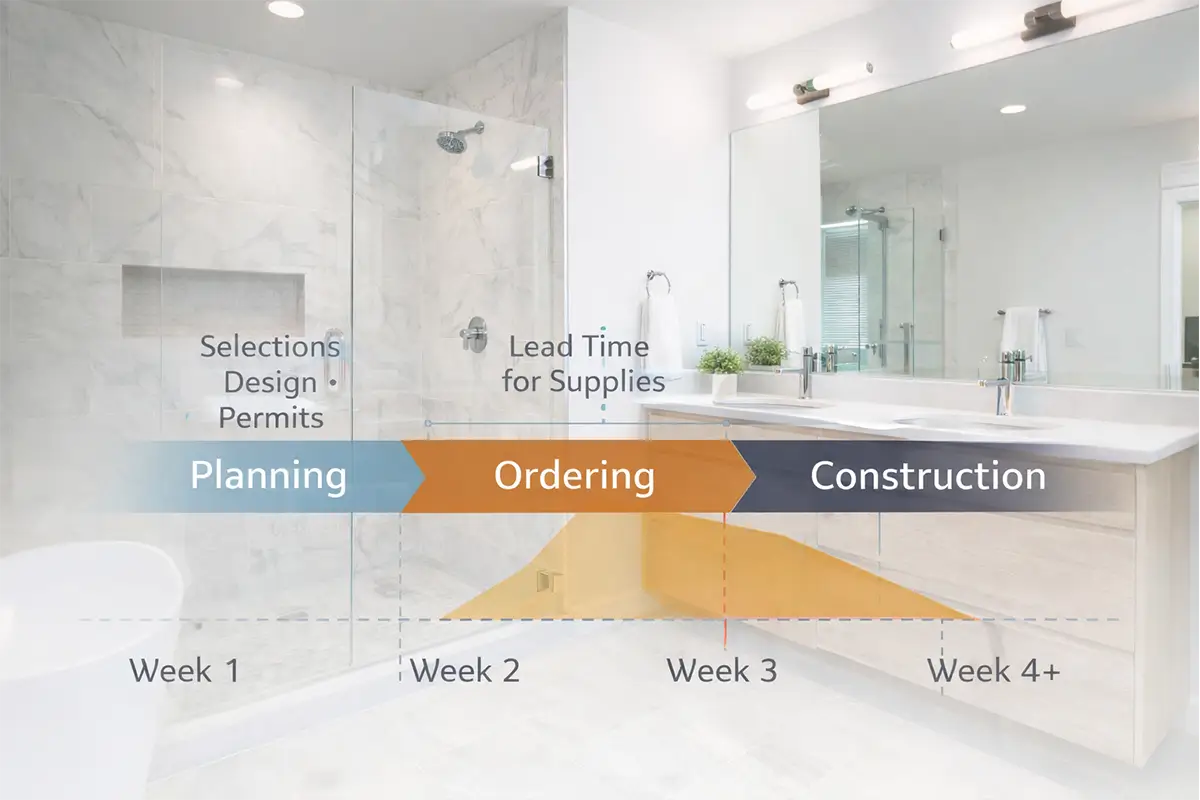
One of the biggest sources of confusion is that people mix up active construction time with the total project timeline. Active construction is the time crews are actually working in your bathroom. The total timeline also includes planning, scheduling, material lead times, and inspections, which can add several weeks before and during the remodel.
Because every bathroom is different, generic timelines you see online are often misleading. To get a more accurate answer for your situation, use the bathroom remodel timeline estimator below. It factors in project scope, bathroom size, permits, materials, and other real-world variables to show a realistic range for both active work and total project duration.
Want to budget and schedule at the same time? Pair this timeline guide with our bathroom remodel cost calculator to confirm your range before you start.
Bathroom Remodel Timeline Estimator
Most bathroom remodels take about 3–6 weeks of active work and 6–12+ weeks in total, depending on scope, permits, materials, and bathroom size.
Estimated Timeline
Active Construction Time: —
Total Project Timeline: —
What can slow it down
How to speed it up
Typical Phase Breakdown
How to Use the Bathroom Remodel Timeline Estimator
The estimator below is designed to give you a realistic timeline range based on how bathroom remodels are actually scheduled and built. Start by choosing your Project Scope (Cosmetic Refresh, Standard Remodel, or Full Gut Remodel). The tool will automatically set a reasonable default for Permits & Inspections based on the scope you pick, but you can change that option if your project is different.
Next, select your Bathroom Size and Tile Complexity. Tile complexity matters because simple layouts usually move faster, while patterns, niches, trim details, and heavy cutting can add time. Then choose your Material Lead Time (in-stock vs. special order vs. long lead items) and confirm whether this is your only bathroom or not.
Click Calculate to see two results: Active Construction Time and Total Project Timeline. Active construction time is the time crews are physically working on-site. Total timeline includes start lead time, scheduling, material delays, and inspections—so it’s the number most homeowners should plan around. You’ll also see a quick list of what can slow the project down, how to speed it up, and a Typical Phase Breakdown that updates based on the options you selected.
Tip: Try running the estimator a few times with different choices (for example, “special-order materials” vs. “in-hand”) to see how planning decisions affect your schedule before you start demolition.
If you’re planning tile, use the shower tile layout tool to preview patterns and cuts before ordering materials.
Disclaimer: This estimator provides planning ranges only and is not a contract or guaranteed schedule.
Average Bathroom Remodel Timeline (Quick Answer)
If you just want a realistic starting point, here’s a simple bathroom remodel timeline based on typical professional work and normal scheduling. Your exact schedule can shift depending on permits, materials, tile complexity, and whether the bathroom is your only one.
- Cosmetic refresh: about 1–2 weeks of active work and roughly 4–8 weeks total (planning + scheduling included).
- Standard remodel (remove & replace, same layout): about 3–4 weeks of active work and roughly 6–10 weeks total.
- Full gut remodel (layout/plumbing/electrical changes): about 4–6 weeks of active work and roughly 8–12+ weeks total.
Keep in mind: the “total” timeline is usually longer than homeowners expect because most projects don’t start the day you sign—materials, selections, and scheduling often take several weeks before active construction begins.
Quick planning tip: Once you know your timeline, estimate materials with our tile square footage calculator so ordering doesn’t delay your start date.
What Affects How Long a Bathroom Remodel Takes
When homeowners ask how long does a bathroom remodel take, the answer almost always comes down to a few core variables. Even bathrooms of the same size can have very different timelines depending on how much work is involved and how the project is planned.
Scope of Work
The scope of the remodel has the biggest impact on timing. A cosmetic refresh focuses on surface updates and usually moves quickly. A standard remodel involves demolition, waterproofing, and tile work, which adds time. A full gut remodel takes the longest because it includes structural changes, plumbing and electrical work, drywall, and inspections.
Permits and Inspections
Permits don’t always add labor time, but they can add waiting time. Inspections often pause work until they’re approved, which is why permitted projects usually take longer than permit-free cosmetic updates.
Tile Complexity
Tile size, layout, and design details matter more than most people expect. Simple grid layouts move faster, while mosaics, herringbone patterns, niches, and trim pieces require more layout time, cutting, and setting, which extends the schedule.
Material Lead Times
In-stock materials keep projects moving. Special-order or custom items can delay the start of construction or pause progress mid-project if they arrive late.
Bathroom Size and Layout
Larger bathrooms take longer simply because there’s more surface area to prep, waterproof, tile, and finish. Layout changes also add time, especially when plumbing or electrical locations are moved.
Active Construction Time vs Total Project Timeline
One reason people get confused about how long does a bathroom remodel usually take is that two very different timelines are often mixed together. Understanding the difference between them helps set realistic expectations from the start.
Active construction time is the period when crews are physically working in your bathroom. This includes demolition, plumbing and electrical work, waterproofing, tile installation, drywall, paint, and final fixture installation. These are the days you see real progress happening on-site.
Total project timeline includes much more than active work. It also accounts for planning, design decisions, material ordering, scheduling trades, permit processing, and inspection windows. In many cases, a project may not begin active construction until 3–6 weeks after a contract is signed, especially if materials need to be ordered or permits are required.
The timeline estimator above separates these two numbers on purpose. Active construction time shows how long the work itself typically takes, while the total timeline reflects how long you should realistically plan for from start to finish. This is why asking how long should a bathroom remodel take requires looking beyond just construction days.
Bathroom Remodel Timeline by Project Type
How Long Does It Take to Remodel a Small Bathroom?
When homeowners ask how long does it take to remodel a small bathroom, the answer is usually shorter than for larger spaces—but not always dramatically shorter. Smaller bathrooms have less surface area to prep and tile, which helps, but the same trades are still involved.
A small bathroom remodel typically follows the same steps as a larger one: demolition, waterproofing, tile, fixtures, and inspections if required. If the layout stays the same and materials are in stock, active construction can move efficiently. Tile complexity and permit requirements often matter more than square footage.
How Long Does a 5×8 Bathroom Remodel Take?
A common question is how long does a 5×8 bathroom remodel take. A 5×8 bathroom is considered standard size, so timelines usually fall right in the middle of the typical range.
Most 5×8 remodels take about 3–4 weeks of active construction, with total project timelines often landing between 6–10 weeks once planning, scheduling, and inspections are included. Changes to plumbing locations, tile patterns, or custom materials can push that timeline longer.
How Long Does a Complete Bathroom Remodel Take?
If you’re wondering how long does a complete bathroom remodel take, this usually refers to a full remove-and-replace project where everything is updated but the layout stays mostly the same.
These projects typically include demolition, new waterproofing, tile installation, drywall and finishing work, and new fixtures. Because multiple trades are involved and cure times are required, a complete remodel generally takes several weeks of active work and additional time for planning and coordination.
How Long Does a Full Bathroom Remodel Take?
How long does a full bathroom remodel take depends largely on how much is being changed. Full gut remodels include layout changes, new plumbing and electrical work, drywall and taping, waterproofing, tile installation, and multiple inspections.
These projects often take 4–6 weeks of active construction and can extend to 8–12 weeks or more from start to finish once planning, permits, and material lead times are included.
In many areas, bathroom remodels require permits and inspections based on local building codes, which can affect scheduling and inspections timelines. You can review general permit requirements through your local building department or resources like the National Kitchen & Bath Association.
Why Bathroom Remodels Often Take Longer Than Expected
Even with good planning, bathroom remodels sometimes take longer than homeowners expect. In most cases, delays are not caused by slow work, but by factors that are difficult or impossible to see before demolition begins.
- Hidden damage: Water damage, mold, or structural issues are often discovered after walls or floors are opened, and repairs must be completed before work can continue.
- Inspection scheduling: When permits are required, work may pause while waiting for inspections to be approved, especially during busy seasons.
- Material delays: Backordered tile, fixtures, or custom items can slow progress or delay the start of construction altogether.
- Design or scope changes: Mid-project changes—such as switching tile patterns or moving fixtures—often add extra days or weeks.
- Coordination between trades: Bathroom remodels involve multiple licensed trades, and schedules must line up correctly for the project to move efficiently.
Understanding these common delay points helps explain why realistic timelines matter and why professional remodels rarely follow “one-size-fits-all” schedules.
See real examples: Browse finished remodels and planning tips in our bathroom remodel blog to understand what delays look like in real projects.
Why Bathroom Remodels Often Take Longer Than Expected
Even with good planning, bathroom remodels sometimes take longer than homeowners expect. In most cases, delays are not caused by slow work, but by factors that are difficult or impossible to see before demolition begins.
- Hidden damage: Water damage, mold, or structural issues are often discovered after walls or floors are opened, and repairs must be completed before work can continue.
- Inspection scheduling: When permits are required, work may pause while waiting for inspections to be approved, especially during busy seasons.
- Material delays: Backordered tile, fixtures, or custom items can slow progress or delay the start of construction altogether.
- Design or scope changes: Mid-project changes—such as switching tile patterns or moving fixtures—often add extra days or weeks.
- Coordination between trades: Bathroom remodels involve multiple licensed trades, and schedules must line up correctly for the project to move efficiently.
Understanding these common delay points helps explain why realistic timelines matter and why professional remodels rarely follow “one-size-fits-all” schedules.