Bathroom flooring guide
Best Bathroom Flooring: Tile, Vinyl and Other Options Compared
What is the best flooring for a bathroom? For most bathrooms, floor-rated porcelain tile is a strong long-term choice when the budget allows proper subfloor preparation and installation. Sheet vinyl can be a practical lower-cost option with few seams, while bathroom-approved luxury vinyl plank can suit a room where a softer, warmer feel matters. No finish alone makes the floor assembly waterproof. The best choice depends on how the room gets wet, who uses it, how you clean it, and what is under the existing floor.
Before choosing a color, ask what problem the new floor needs to solve. A busy family bathroom, a guest powder room, and a curbless shower room do not need identical flooring. This guide compares the materials, explains the installation details, and helps you decide where to spend your budget.
At a glance: which floor fits your bathroom?
| Priority | Compare first | Check before buying |
|---|---|---|
| Long service life and design range | Floor-rated porcelain or ceramic tile | Subfloor stiffness, installation time, grout care |
| Fewer seams and a modest budget | Sheet vinyl | Product quality, edge details, damage repair |
| A warmer feel near adjoining rooms | Bathroom-approved LVP or LVT | Water at seams and edges; installation instructions |
| Natural character | Stone tile | Porosity, sealing and cleaning |
| Warmth under bare feet | Porcelain tile with compatible floor warming | Electrical work, added floor height and operating cost |
This is a starting point, not a universal ranking. Confirm that the exact product is approved for the bathroom. A shower floor needs its own selection and waterproofing plan.
Porcelain and ceramic tile: the durable default
Porcelain tile is often our first comparison point for a full bathroom renovation. It comes in restrained colors, patterned designs, and convincing stone and wood looks. Properly chosen floor tile holds up well to ordinary wet-foot traffic. Ceramic floor tile can work too. The label floor-rated matters more than the broad ceramic-versus-porcelain distinction: a wall tile is not automatically suitable underfoot.
Tile has tradeoffs. It is hard and can feel cold over a slab or unheated space. The subfloor must suit the tile assembly; movement below the finish can crack tile or grout. Grout joints need cleaning. Larger tiles reduce the number of joints on the main bathroom floor, but require a flatter substrate and a considered layout.
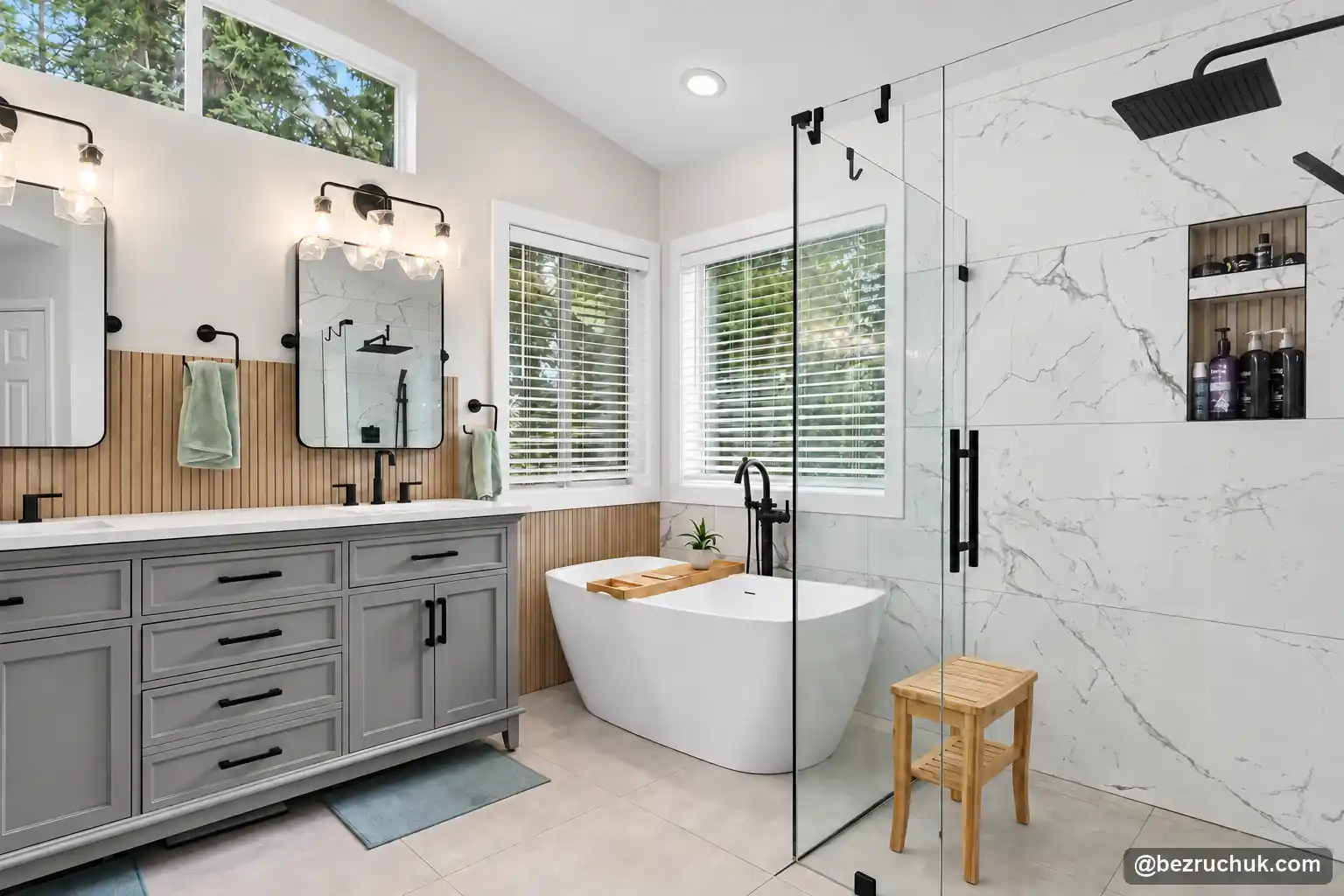
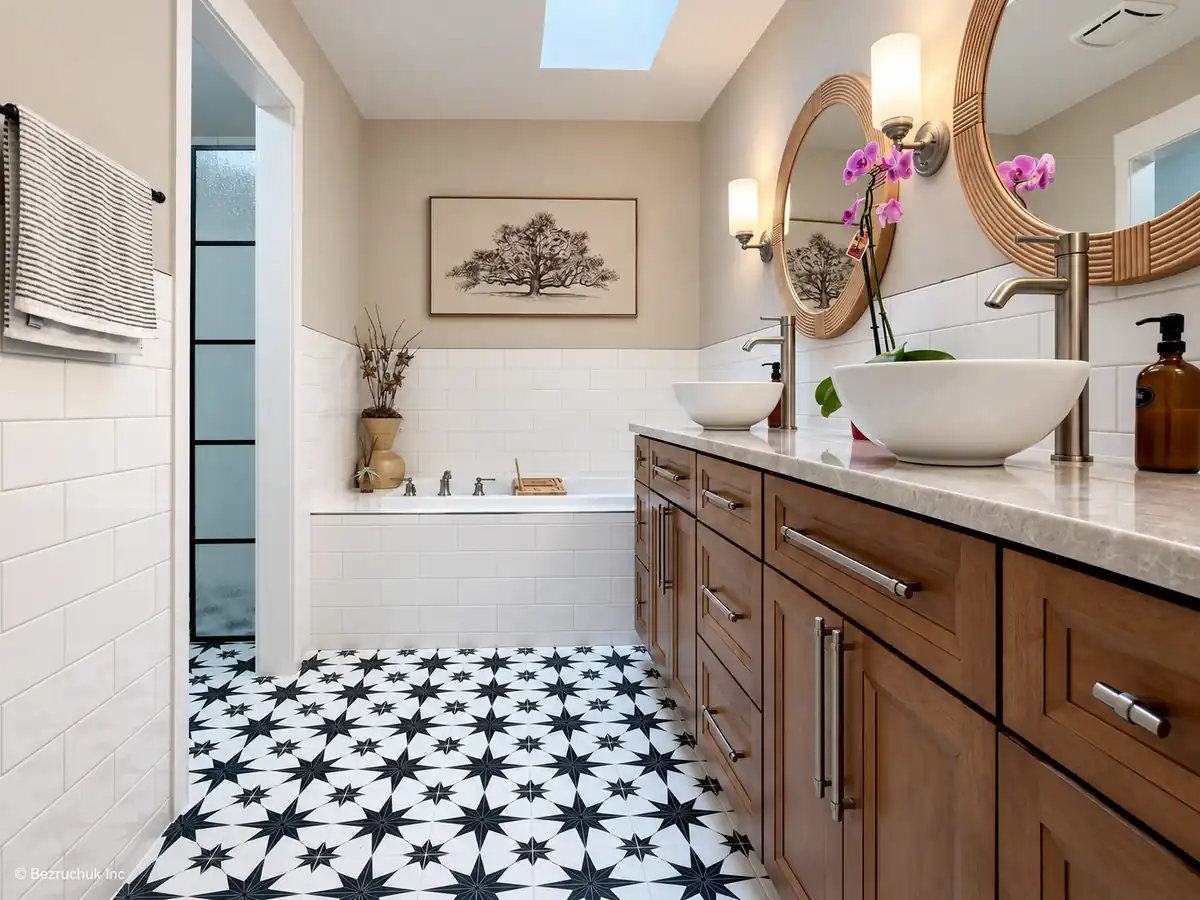
Choose a surface for wet feet, not only for its showroom appearance. Ask for the manufacturer’s Interior, Wet classification under ANSI A326.3, and consider texture, cleaning, and the people who use the room. The Tile Council of North America explains why a friction number alone cannot predict a slip. A South Hill bathroom we remodeled uses a bold patterned floor while keeping the walls quieter; that completed room is pictured above.
Sheet vinyl: fewer seams at a lower entry cost
Sheet vinyl deserves a serious comparison. One sheet may cover most of a small bathroom without the field joints of plank or tile. It usually feels softer and less cold than tile, and may leave more of the budget for repairs and other bathroom work.
Water can still enter at vulnerable edges, penetrations, or a damaged seam. A gouged sheet can be awkward to patch invisibly. The substrate needs to be smooth because irregularities may show through. Discuss the toilet flange, tub edge, doorway, and baseboards before cutting the material. A low material price does not eliminate subfloor preparation.
Sheet vinyl is appealing when a household wants straightforward cleaning and fewer joints. Check the specific product’s installation instructions; rolls are not all installed or sealed the same way.
Luxury vinyl plank or tile: comfortable, but check the assembly
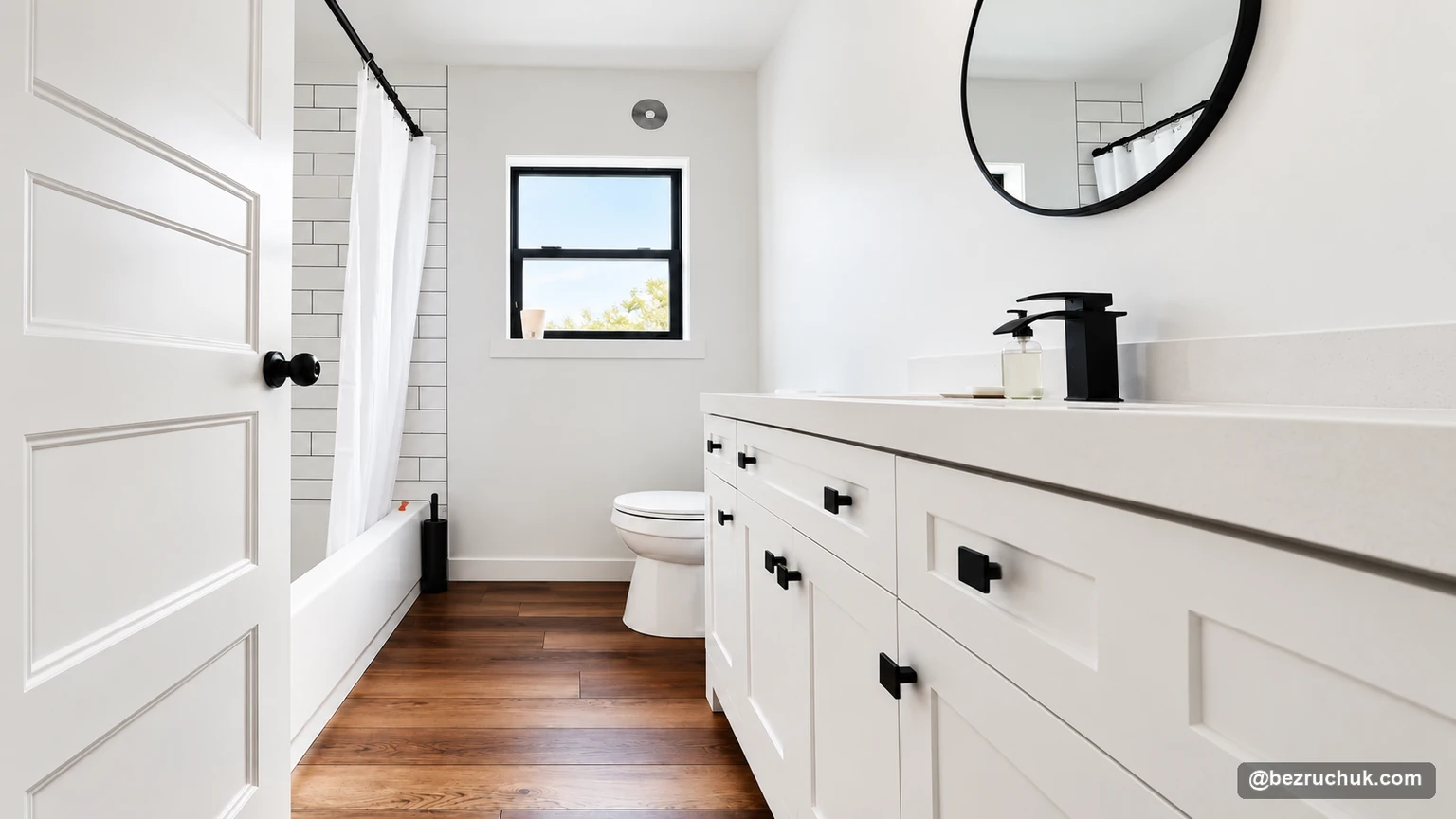
Luxury vinyl plank (LVP) and luxury vinyl tile (LVT) offer wood or stone looks without using those natural materials. They tend to feel warmer than tile and can make sense when the floor continues into a bedroom or hall. In an older Puyallup bathroom near the Washington State Fairgrounds, we used wood-look LVP with white tile and cabinetry.
A waterproof plank does not make the entire floor assembly waterproof. Floating products have joints and perimeter gaps; water can reach the subfloor and remain hidden. Choose a product approved by its maker for bathroom use. Follow its instructions at the toilet, tub, transitions, and perimeter, and meet its subfloor requirements.
Installed LVP is not automatically the cheapest choice. Uneven or damaged subfloors and extra trim can add labor. LVP also cannot replace the waterproofing required in a shower. If the main bathroom floor frequently has standing water, review the entire water-management plan before choosing a floating finish.
Stone, wood and concrete: when the look needs extra care
Natural stone can be distinctive, but the exact stone determines moisture behavior, cleaning, and wear. Some stones need sealing and gentler maintenance than porcelain. Ask how the selected finish will look after regular cleaning and whether it is suitable for wet feet. The installation still needs a sound substrate.
Wood and engineered wood can connect a bathroom visually to a bedroom floor, but a full bathroom is demanding. Water around the tub, shower, or toilet can reach edges and joints. If continuity is the main goal, compare wood-look porcelain or bathroom-approved vinyl before making a decision.
Concrete and resin or epoxy finishes may work where the existing slab and specified system support them. They are specialized choices, not the two default options for an upstairs bathroom. The slab’s moisture, cracks, surface texture, and finish maintenance need to be understood first.
The shower floor is a different decision
A main bathroom floor may see splashes and wet feet. A shower floor gets direct water, needs drainage, and belongs to a complete wet-area assembly. Do not carry a floor material into the shower without checking the system behind it.
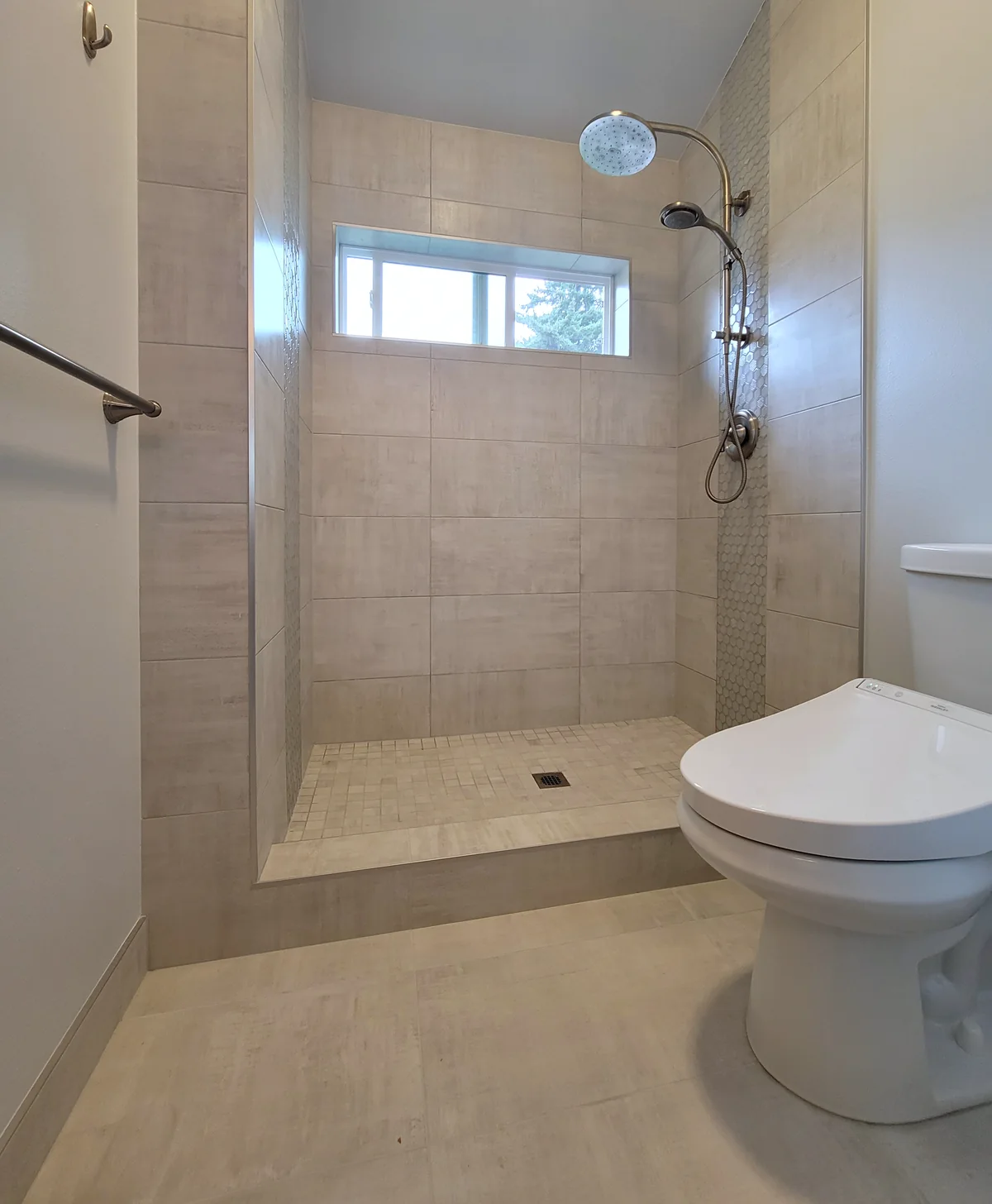
Our Seattle home addition has a microcement shower floor and walls with a black linear drain. Its seamless appearance is one design possibility. The finish and sealer are only part of the specified shower system: slope, drain connection, waterproofing, and maintenance matter as much as the visible surface. Microcement is not a universal substitute for a waterproofing membrane, and this photo does not show a generic concrete bathroom floor.

The layer below the floor is part of the decision
Plan a bathroom floor as an assembly: finish, installation materials, any required underlayment or membrane, and a sound subfloor. Before covering an old floor, investigate movement, soft spots, past leaks near the toilet or tub, and height changes at the doorway. A new finish can conceal damage without correcting it.
Tile and grout do not make a waterproofing system by themselves; grout joints are not waterproof. Decide whether an additional waterproofing layer is appropriate for the main bathroom floor and substrate. In a wet room or curbless shower that extends into the open floor, waterproofing and drainage design are central. A standard tile or LVP installation outside a shower should not be assumed to meet wet-room conditions.
Plan the edges before demolition ends. The new floor should meet the tub or shower, toilet, vanity, walls, and neighboring room cleanly. A beautiful sample can still create a poor result if the new floor height interferes with a door or makes a trip point.
Is a heated bathroom floor worth it?
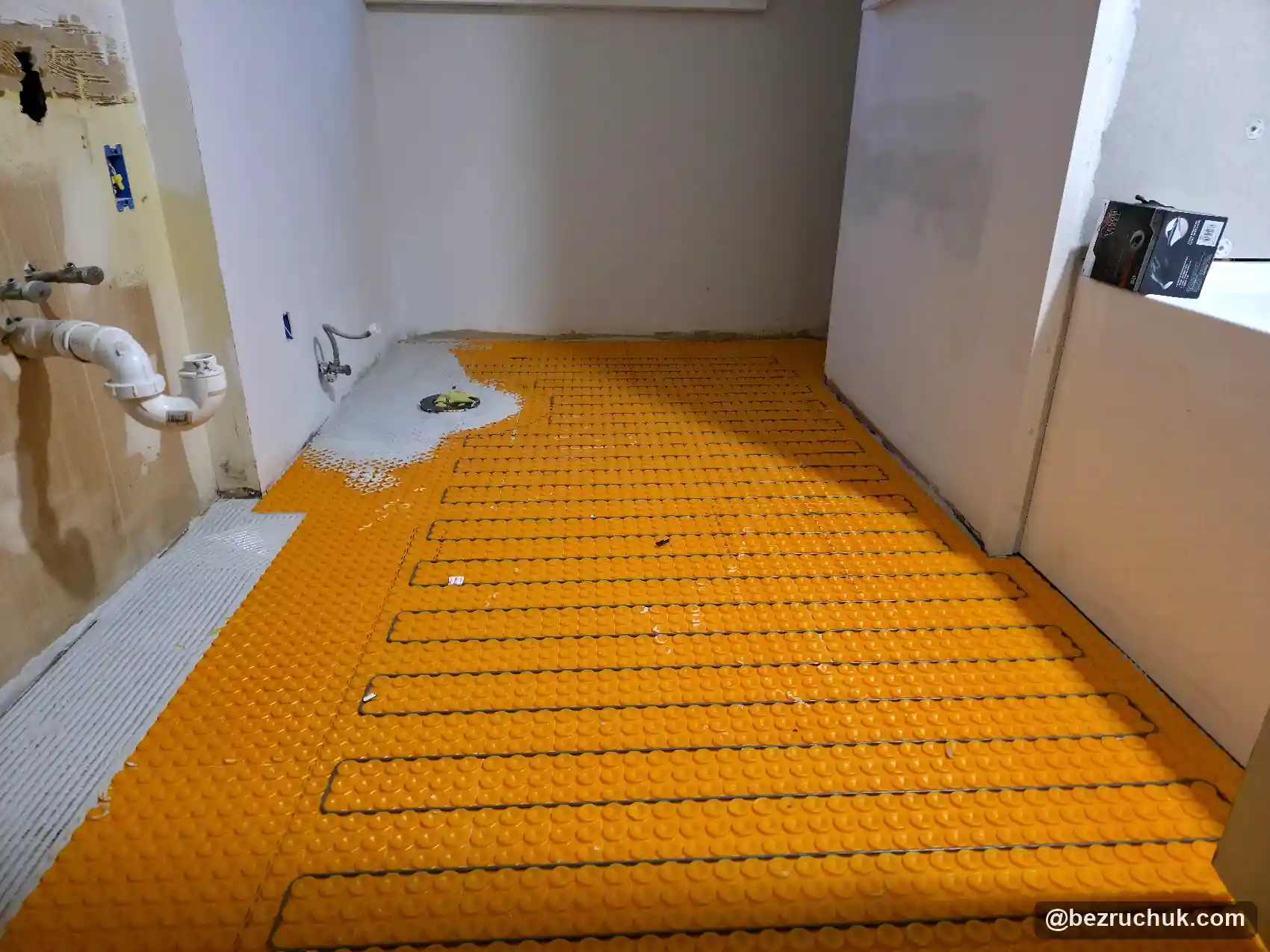
Floor warming is a comfort upgrade, not a requirement. It is especially pleasant with tile on a chilly morning or over an unheated area. In a Kent guest bathroom, we installed a heated porcelain tile floor and planned the finish and heating system together before the tile went down.
Ask for the complete installed price, including electrical work, thermostat, floor preparation, and any change in height. Also ask whether the system is for warm feet or is expected to heat the room. The heating system must be compatible with the tile assembly and tested as its maker directs. For example, Schluter’s DITRA-HEAT guidance explains that seams and floor-to-wall connections must be sealed when that membrane assembly is intended to be waterproof.
If the room is already comfortable and the budget is tight, spend first on subfloor repairs and a sound installation. Heating cannot rescue a failing base.
What should you budget for the floor?
Compare installed scopes, not only material prices per square foot. A quote may include demolition, disposal, subfloor repair, flattening, underlayment or membrane, heating, tile setting or vinyl installation, trim, toilet removal and reset, and doorway transitions. In a small bathroom, these fixed tasks may matter more than the finish area.
For a whole-room planning range, use our bathroom remodel cost calculator. To estimate tile quantity, measure the floor and use our tile square footage calculator with a waste allowance suited to the layout. Neither tool can diagnose a soft subfloor hidden under the old finish.
If you are planning a complete room update, our Puyallup bathroom remodeling page explains how the floor, shower, fixtures, and waterproofing fit into one scope.
A practical way to choose
Start with three candidates rather than dozens of samples. For a family tub bathroom, compare a floor-rated porcelain tile, bathroom-approved vinyl plank, and sheet vinyl you would enjoy living with. Put each sample on the bathroom floor, not only under showroom lights. See it beside the vanity and wall colors and consider how it feels under bare feet.
Ask your contractor to explain the assembly under each finish. What needs repair? How will the surface meet the toilet and tub? Will the height change create a threshold? Which cleaners does the maker allow? These answers usually narrow the choice faster than a trend list.
There is no single best bathroom floor for every house. Porcelain is often a strong long-term starting point. Sheet vinyl and approved LVP can make sense when comfort, budget, or continuity matter more. Choose both the finish you like and an installation plan that fits the room underneath it.
Bathroom flooring questions
Is porcelain tile better than LVP in a bathroom?
Porcelain is usually the better choice when durability and a long-lived tile finish are the priorities and the subfloor can support a proper tile assembly. Bathroom-approved LVP can be a good choice when a warmer feel, fewer grout joints or continuity with nearby rooms matters more. Neither option protects a damaged subfloor by itself.
Is a waterproof vinyl plank floor waterproof for the whole bathroom?
No. A plank may resist water damage, but water can still reach the subfloor at joints, edges, the toilet or other penetrations. Follow the exact product’s bathroom installation instructions and repair any existing water problem first.
Can the same tile be used on the bathroom and shower floors?
Sometimes, but do not assume it. A shower floor has different drainage, slope, barefoot traction and waterproofing requirements. Confirm that the selected tile and shower assembly are approved together.
What bathroom floor is easiest to clean?
A sheet vinyl floor with few seams or a larger-format floor tile with a suitable grout can reduce the number of joints to clean. The surface texture and manufacturer’s cleaning instructions still matter. Very textured finishes may give helpful traction but can take more effort to scrub.
Should I replace a soft bathroom subfloor before new flooring?
Yes. A soft or moving area should be opened and assessed before new finish goes down. The cause may be a past leak, moisture damage or another structural issue. New tile or vinyl will not correct it.
Are heated bathroom floors worth the added cost?
They can be if you dislike cold tile, especially when the floor is already being rebuilt. Get a quote that includes electrical work and controls, and compare that comfort benefit with more urgent spending on substrate repair and waterproofing.