
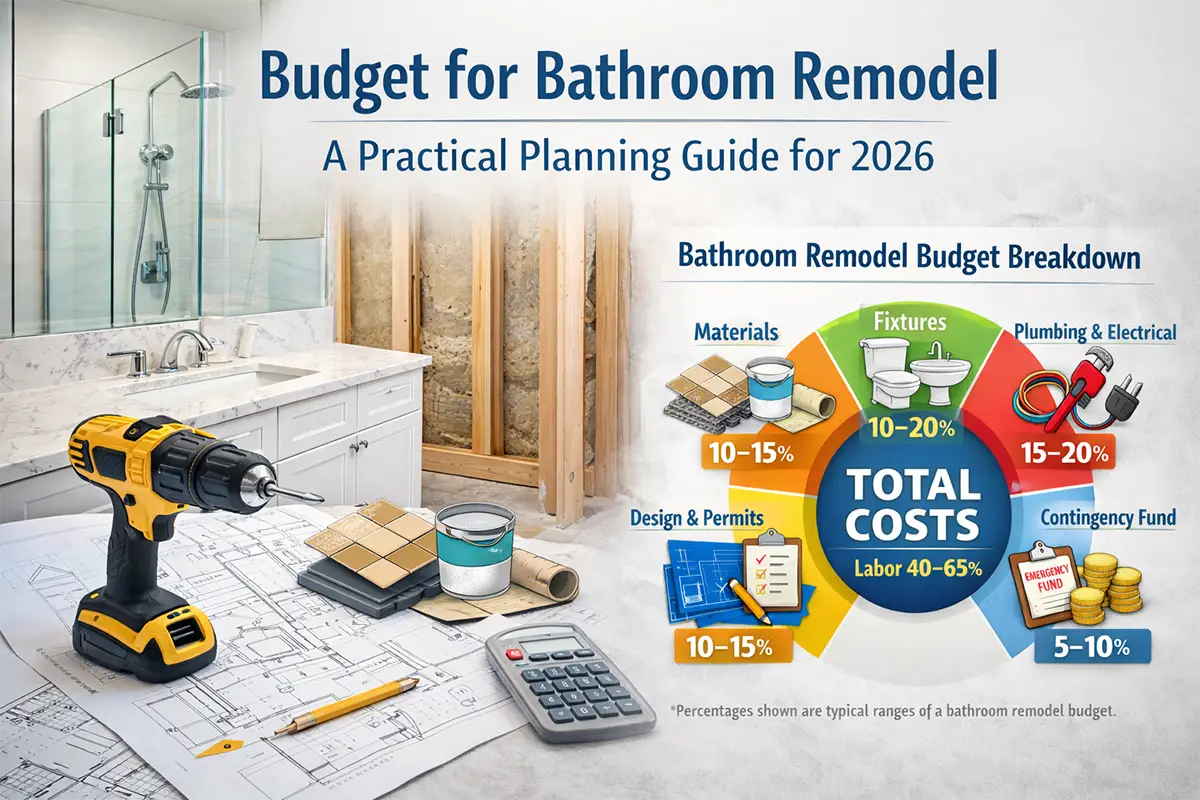
Budget for Bathroom Remodel: A Practical Planning Guide for 2026
A realistic budget for bathroom remodel projects typically ranges from about $8,000 to $45,000. Budgets near the lower end are usually achievable only when homeowners provide their own labor, reuse the existing layout, and choose basic materials. Professional labor, plumbing or electrical upgrades, and premium finishes drive costs toward the higher end.
Setting a budget range before choosing tile, fixtures, and finishes keeps you in control from design through final inspection. By investing more in high-use areas—like waterproofing, ventilation, and durable surfaces—and building a contingency fund, you can avoid surprises and prioritize what matters most to your daily routine.
This guide explains typical cost ranges, shows where remodel budgets are spent, and explores the choices that most affect the final price. With clear planning and realistic numbers, you can make confident decisions and create a comfortable bathroom without overspending.
Understanding Bathroom Remodel Costs in 2026
Setting a realistic budget for bathroom remodel projects starts with knowing what similar projects cost today. Recent pricing guides suggest that most U.S. homeowners spend between $8,000 and $45,000 on a full bathroom renovation, with guest bathrooms typically falling in the $14,000–$22,000 range. The national average for a mid‑scale remodel lands around $12,115, but your final investment could be as low as $3,000 or climb past $30,000 depending on materials and scope. When measured per square foot, costs usually range from about $70 to $250, with luxury finishes pushing that figure higher. Keeping these ranges in mind helps you align expectations before diving into design choices.
These benchmarks give homeowners a realistic framework for setting a budget for bathroom remodel projects of any size.
To make the numbers easier to digest, the table below summarizes common bathroom remodel cost components. Budget remodels focus on cosmetic updates and typically stay under $10,000; mid‑range remodels can include new fixtures, tile and lighting; high‑end remodels involve reconfiguring layouts or selecting premium materials. Use this as a starting point when
mapping out your own investment.
| Component | Budget range | High-end range |
|---|---|---|
| Bathtub or shower | $1,200–$4,500 (new tub or liner) | $10,000+ for luxury spa tubs |
| Flooring (per sq. ft.) | $7–$20 | $20+ for heated floors and premium tile |
| Lighting & electrical | $150–$1,000 | $4,000+ with custom fixtures |
| Cabinets & vanities | $300–$4,000 | $10,000+ for custom built-ins |
| Countertops (per sq. ft.) | $15–$60 | $200+ for marble or granite |
| Fixtures (toilet, sink, faucet) | $100–$500 | $2,000+ for designer pieces |
*Actual costs vary by location and finishes. Use this table as a rough benchmark when setting your project budget.
Key Factors That Shape Your Budget
Bathroom size, layout and scope
The size of your bathroom and how much you plan to change it have the biggest impact on cost. A full remodel of a 40‑ to 150‑square‑foot bathroom often lands in the upper‑teens once demolition and disposal are included. Cosmetic makeovers that reuse the existing layout typically come in lower.
Larger bathrooms require more materials and labor, while half baths and powder rooms typically cost less. Major layout changes—such as moving the toilet or shower—can add thousands of dollars because new plumbing, electrical wiring and structural work are required. Keeping fixtures in their current locations often saves $3,000–$10,000, while bathroom expansions can add significant cost depending on the scope of work.
Materials and finish choices
Materials drive a significant portion of your budget. Replacing flooring generally costs between $7 and $20 per square foot. Tile is the most popular choice, while vinyl planks or linoleum can be a more budget‑friendly option. Premium countertop materials like granite or marble can exceed $200 per square foot. Choosing mid‑range finishes such as quartz or porcelain tile offers durability and style without blowing your budget.
Fixtures also span a wide range of price points, from basic models to high‑end designer options.
Labor and professional services
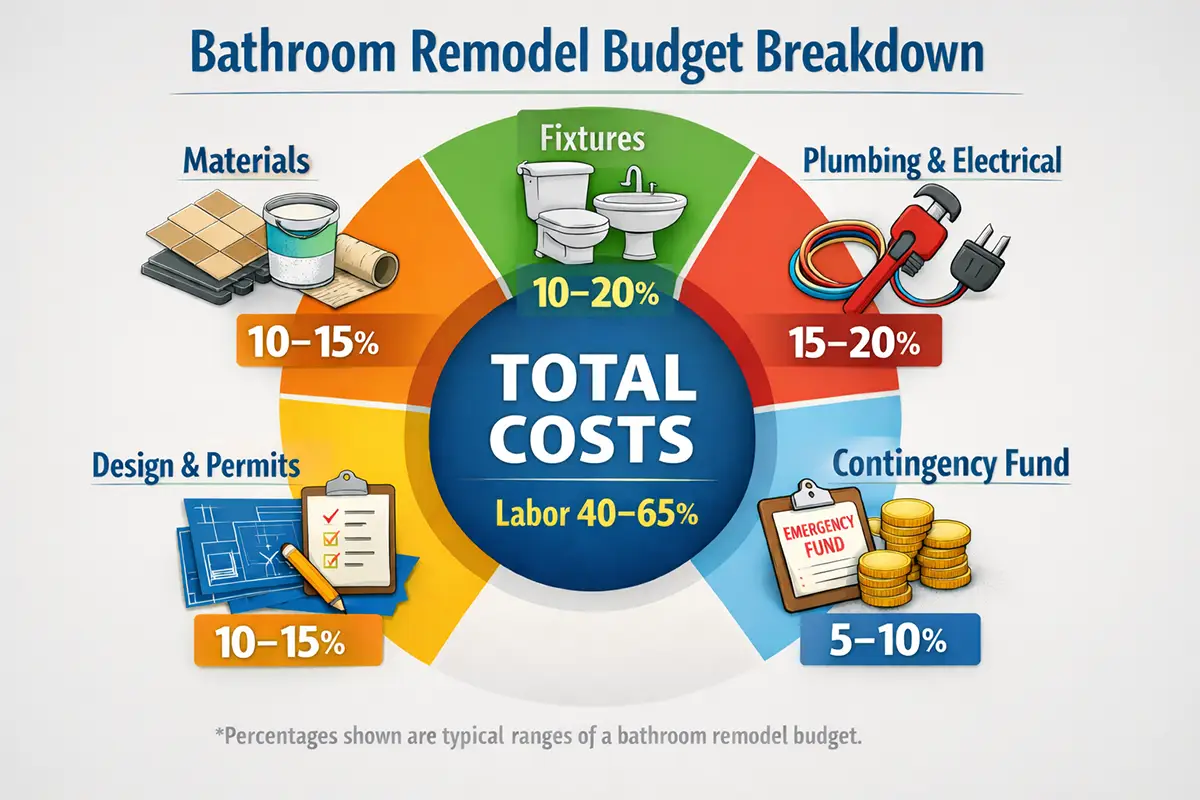
Labor typically makes up 40–65 % of your total project cost. This includes demolition, plumbing and electrical work, tile installation, permits and inspections. Hiring licensed tradespeople ensures your remodel meets local building codes and functions safely, but it does come at a premium. Planning your scope carefully and communicating decisions early helps avoid costly change orders later.
Plumbing, electrical and layout changes
Relocating fixtures or expanding a bathroom means altering plumbing, wiring and the structure itself. Each new wall you build, rerouted electrical line, or plumbing adjustment increases labor and material costs. Preserving the current layout whenever possible is one of the most effective ways to stay on budget.
Each of these elements directly affects your overall bathroom remodel budget and long-term value.
Typical Cost Breakdown by Component
Breaking down costs by component helps identify where you can splurge or save. The table below lists common fixtures and finishes with low- and high-end price ranges. All prices include labor and materials unless noted otherwise.
| Component | Budget range | High-end range |
|---|---|---|
| Bathtub or shower | $1,200–$4,500 (new tub or liner) | $10,000+ for luxury spa tubs |
| Flooring (per sq. ft.) | $7–$20 | $20+ for heated floors and premium tile |
| Lighting & electrical | $150–$1,000 | $4,000+ with custom fixtures |
| Cabinets & vanities | $300–$4,000 | $10,000+ for custom built-ins |
| Countertops (per sq. ft.) | $15–$60 | $200+ for marble or granite |
| Fixtures (toilet, sink, faucet) | $100–$500 | $2,000+ for designer pieces |
Smart Budgeting Strategies for a Bathroom Remodel Budget
Set a realistic range and build in a contingency
Start by deciding how much you can comfortably invest and refer to cost tiers for guidance. Industry experts recommend reserving a contingency fund of 7–10 % for straightforward projects and up to 20 % for older homes or major relocations. This cushion covers hidden damage, permit fees and other
surprises that inevitably arise during demolition. Allocate this money in a separate line item so it doesn’t get spent on upgrades that weren’t part of the original scope.
Prioritize must-haves and high-ROI improvements
Not every upgrade contributes equally to resale value. Mid-range remodels generally offer the best return, recouping 65–80 % of their cost upon resale. Focus on functional improvements such as adequate lighting, efficient plumbing fixtures and durable flooring. Universal or accessible remodels tend to recoup around 61 % of the investment, while upscale, highly customized spaces may see returns closer to 36 %. Consider whether luxury additions like heated floors or a steam shower are essential to your lifestyle or if those funds would be better spent on elements with higher ROI.
Save smart without sacrificing quality
You can trim costs while still achieving a fresh, high-quality look. Here are a few proven strategies:
- Keep the existing layout: Avoid moving plumbing or electrical components whenever possible; doing so preserves thousands of dollars in labor and materials.
- Refinish or reglaze instead of replace: Reglazing a tub costs around $450–$950, while a new tub canexceed $10,000. Similar savings apply to cabinets and vanities.
- Select durable mid-range finishes: Materials like quartz, porcelain tile and semi-custom cabinetry offer longevity without the high price of marble or exotic woods.
- Tackle simpler tasks yourself: Painting walls, swapping hardware or doing light demolition can reduce labor costs. Leave plumbing, electrical work and waterproofing to professionals for safety and code
compliance. - Get multiple quotes: Compare bids from at least three licensed contractors to ensure competitive pricing and clear scopes of work. Ask about bulk discounts on materials and schedule flexibility to take
advantage of off-season rates.
These strategies help homeowners build a realistic budget for bathroom remodel projects without sacrificing quality.
Use our tools for accurate estimates
An online estimator is invaluable for fine-tuning your budget. Bezruchuk’s bathroom remodel cost calculator invites you to select your bathroom type, square footage, plumbing changes, electrical upgrades and finishing options. It instantly generates low, mid and high budget ranges using real contractor pricing. This transparency helps you see how each decision affects your overall budget and clarifies whether your project is closer to a simple refresh or a full renovation. Once you have an estimated range, consider reaching out to Bezruchuk for a free, no-obligation consultation on the Get a Quote page.
Return on Investment and Value Considerations
A carefully planned budget for bathroom remodel improvements balances upfront cost with resale performance. Beyond dollars and cents, a well-planned bathroom remodel enhances daily life. Homeowners recoup an average of 80 % of their investment on mid-range projects, but the non-financial benefits are just as compelling.
A modern, functional bathroom improves comfort, reduces maintenance hassles and increases energy-efficiency. In Pierce County, for example, upgrading your bathroom boosts home value, improves functionality, resolves plumbing problems and creates a spa-like retreat. Energy-efficient fixtures and low-flow toilets further reduce utility bills and support sustainable living. When budgeting, balance these intangible rewards with expected resale returns to achieve a renovation that pays dividends both now and in the future. For broader market context, Remodeling Magazine’s Cost vs. Value Report consistently shows bathroom remodels among the highest-ROI home improvements.
Next Steps: Plan With Confidence
Crafting a thoughtful budget for bathroom remodel means understanding current price ranges, identifying the factors that drive costs and prioritizing the updates that matter most. By benchmarking typical costs, choosing
durable mid‑range materials and building in a contingency fund, you can avoid budget surprises. Use the cost calculator for a personalized estimate,
then explore Bezruchuk’s bathroom remodel services and
detailed cost guide for further guidance.
Whether you’re planning a modest refresh or a luxury spa oasis, careful planning and expert advice will ensure your investment results in a space that delivers comfort, style and lasting value.







Leave A Comment