01 / Overview
Does Homeowners Insurance Cover Flood Damage in Washington?
Usually, no. A standard Washington homeowners policy generally does not cover floodwater that rises or flows over the ground into a home. Separate flood insurance is normally needed for that risk. A sudden indoor pipe leak may be treated differently; the cause of the water and the exact policy language decide the claim.
Western Washington’s wetter months are the time to check coverage, drainage, and an evacuation plan—before a storm is forecast. The Washington Office of the Insurance Commissioner explains that most home and renters policies exclude flood damage, and a National Flood Insurance Program policy usually has a 30-day waiting period, with limited exceptions. Buying coverage after water is already on its way may be too late.
02 / Prepare now
Before the rainy season: five checks to make now
- Read the policy you have. Ask your insurance agent how it treats surface flooding, groundwater seepage, sewer or drain backup, and sudden plumbing failures. These are different sources of water and may require different coverage.
- Check flood coverage and its start date. If you have a separate flood policy, confirm when it becomes effective, the deductible, and whether both the building and contents are covered. Ask about any basement or crawlspace limitations.
- Look beyond the flood-zone label. Use the flood map below to understand mapped risk, then ask about local drainage and past water intrusion. A home outside a high-risk zone can still flood.
- Prepare the house and your records. Photograph lower rooms and valuable belongings, keep policy details somewhere accessible, clear gutters and drains, and have a qualified professional check sump pumps or backflow protection where relevant.
- Make a safe-response plan. Follow local emergency alerts, know a route to higher ground, and never enter or drive through floodwater. The National Weather Service’s before-a-flood guide is a useful planning checklist.
These steps cannot prevent every flood, but they give a homeowner time to address coverage gaps and reduce avoidable damage. The rest of this guide explains how insurers distinguish flood damage from other water damage and what to document if water enters the home.
03 / Flood vs. water damage
Flood Damage vs Water Damage: How Insurance Defines the Difference
To understand insurance coverage, it’s important to know how insurers define flood damage versus water damage. While homeowners often use these terms interchangeably, insurance policies treat them very differently. Coverage decisions are based on the source of the water, not the amount of damage it causes.
What insurance considers flood damage
For insurance, the source and pattern of the water matter. Under the National Flood Insurance Program, a flood generally means a temporary condition in which normally dry land is inundated across two or more acres, or two or more properties (one of them yours), by overflow of inland waters or unusual and rapid accumulation of surface water. FloodSmart explains the definition in more detail.
Water entering from a creek, street runoff, or widespread surface flooding is usually excluded from a standard homeowners policy. Groundwater seepage and a backed-up drain can be treated differently from an NFIP-defined flood, and neither should be assumed covered without checking the relevant policy or endorsement. Record where the water came from and ask the insurer how it classifies the event.
What insurance considers water damage
Water damage, by contrast, usually refers to water that originates from inside the home or from a specific, sudden event. Examples include a burst pipe, a failed water heater, an appliance leak, or water entering through a roof opening caused by storm damage.
These events may be covered under a standard homeowners policy because they are considered accidental and unintended. However, coverage still depends on policy language, maintenance history, and whether the damage was addressed promptly.
Why this distinction matters
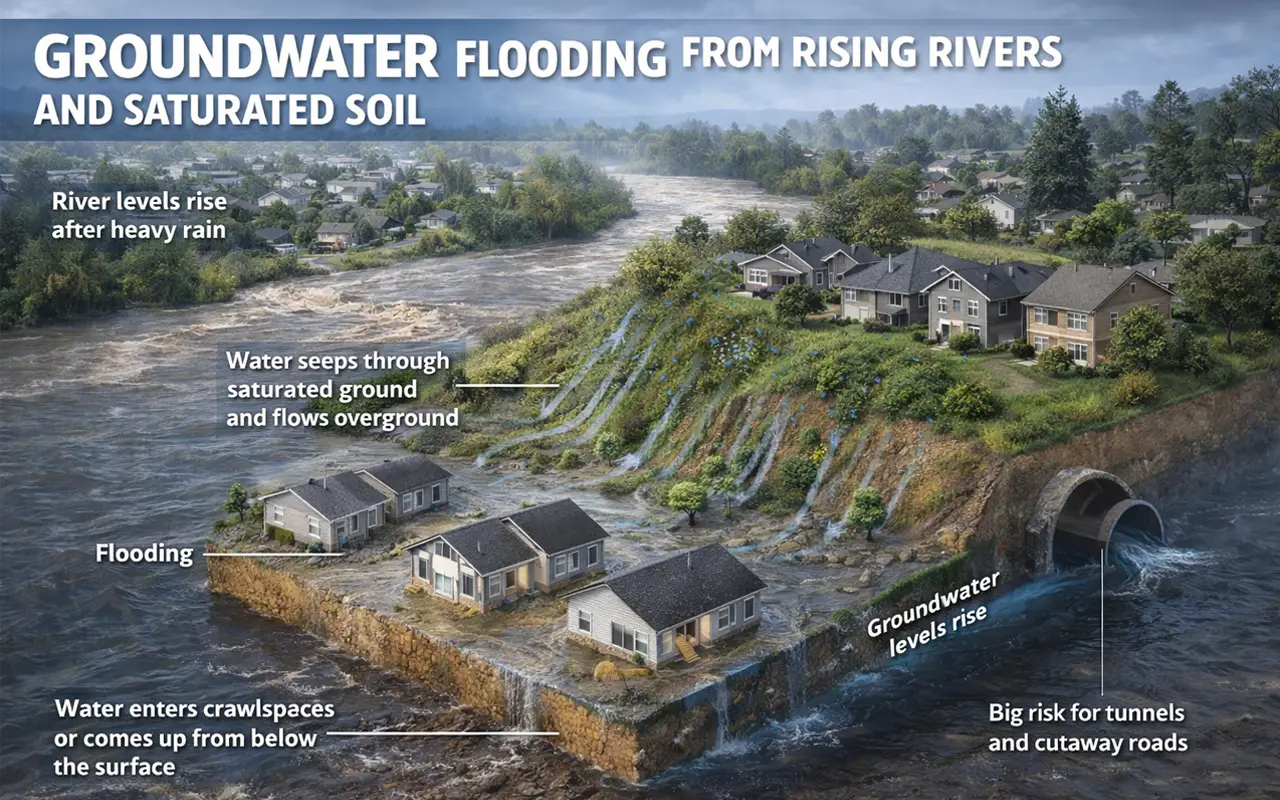
This distinction explains why two homes with similar damage may receive different insurance outcomes. A flooded crawlspace caused by rising groundwater is treated differently than water damage caused by a plumbing failure, even if the repairs look the same.
Understanding how insurers classify water intrusion helps homeowners set realistic expectations before filing a claim or beginning repairs.
04 / Flood policy
When separate flood insurance may apply
A separate flood policy is intended for qualifying flood events, including certain surface-water and river-overflow events. Whether a particular loss meets the policy’s definition, and what part of the property is covered, requires a claim review. Check the effective date and coverage before the rainy season; do not wait for a flood watch.
05 / What may be covered
What Homeowners Insurance Usually Covers
While flooding is commonly excluded, homeowners insurance does cover certain types of water-related damage when the source is sudden and accidental. Coverage depends on how the water entered the home and whether the event was considered preventable through routine maintenance.
Most standard homeowners policies in Washington may provide coverage when water damage originates from inside the home or from a specific, identifiable failure. These situations are typically viewed as unexpected and outside the homeowner’s control.
Examples of water damage that may be covered
- Sudden pipe bursts inside walls or ceilings
- Water heater or washing machine failures
- Dishwasher or refrigerator supply line leaks
- Roof leaks caused by storm damage
In these cases, insurance may cover the cost of repairing damaged materials such as drywall, flooring, and insulation. Coverage decisions often depend on how quickly the issue was addressed and whether there were signs of long-term neglect.
It’s also important to note that coverage usually applies to the resulting damage, not the failed component itself. For example, insurance may cover water-damaged flooring caused by a burst pipe, but not the cost of replacing the pipe if it failed due to age or wear.
Because policy language varies, homeowners are encouraged to review their specific coverage and exclusions before assuming a claim will be approved.
06 / Common exclusions
What Homeowners Insurance Usually Does NOT Cover
Understanding exclusions is just as important as knowing what is covered. In Washington, many homeowners are surprised to learn that significant water-related damage may fall outside their homeowners insurance policy, even when the damage is extensive.
Most standard policies exclude flood damage caused by river overflow or water moving across normally dry land. Groundwater seepage is also commonly excluded, but a separate flood policy does not automatically cover every form of seepage. The source and policy wording matter.
Common water-related exclusions
- River or creek overflow affecting the home
- Groundwater seepage through foundations or crawlspaces
- Surface water entering through doors, vents, or low openings
- Crawlspace flooding caused by prolonged soil saturation
That is why homeowners should ask about separate flood coverage before rainy weather arrives. Flood and homeowners policies have different definitions, limits, and exclusions.
Another common exclusion involves gradual or repeated water exposure. If damage occurs slowly over time due to poor drainage, long-term moisture, or deferred maintenance, insurers may deny coverage even if water damage is present.
Because exclusions are often buried deep in policy language, homeowners sometimes assume they are covered until a claim is reviewed. This is why understanding policy limitations before or immediately after flooding is critical.
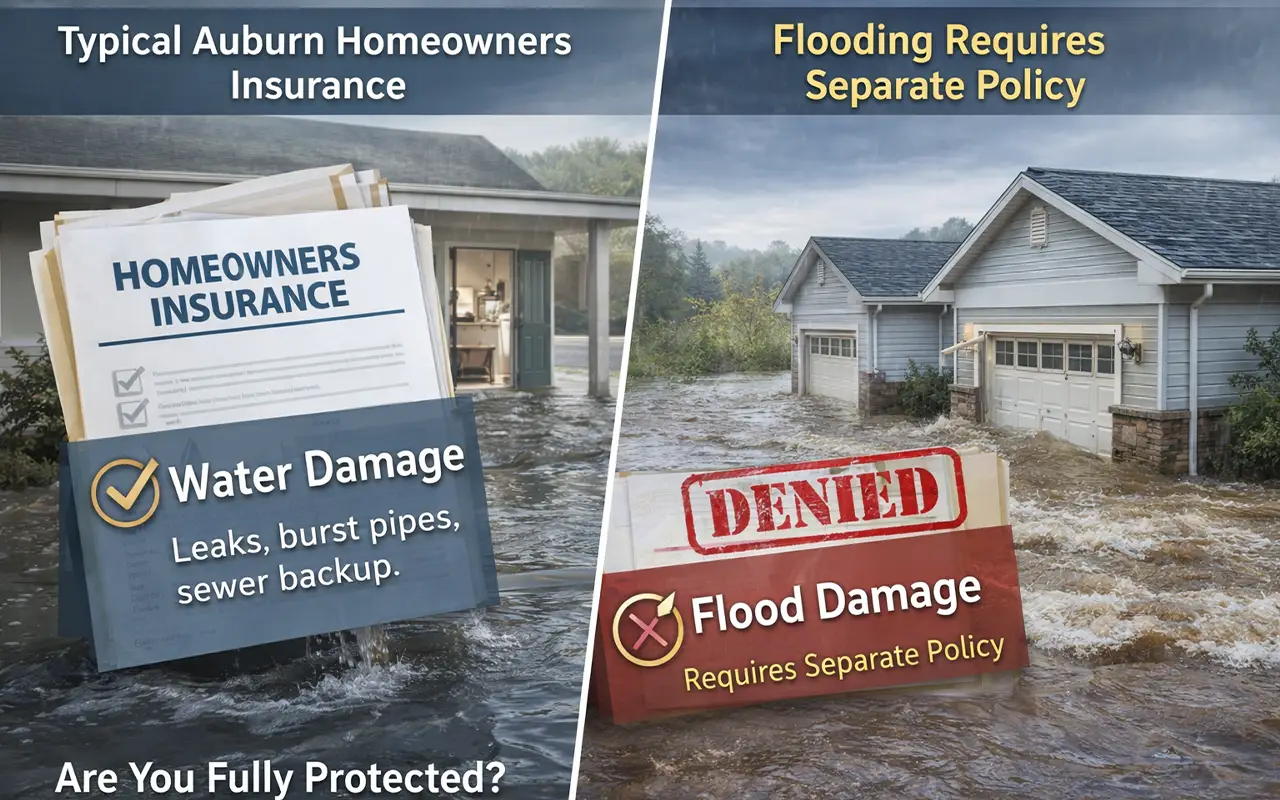
Standard homeowners insurance typically covers sudden internal water damage, but flooding from rivers, groundwater, or surface water usually requires a separate flood insurance policy.
| Water source | Standard homeowners policy | What to check |
|---|---|---|
| Sudden pipe or appliance failure | Resulting damage may be covered | Exclusions, deductible, and repairs to the failed part |
| Rain through a storm-damaged roof | May be covered if the event qualifies | Cause of opening and policy terms |
| Sewer or drain backup | Often excluded without an endorsement | Backup coverage and any flood-related exception |
| Groundwater seepage into a basement or crawlspace | Often excluded | Whether any flood policy applies to the actual cause |
| River overflow or widespread surface flooding | Usually excluded | Separate flood policy, effective date, limits, and deductible |
This table is a planning guide, not a coverage determination. The insurer and policy documents control each claim.
07 / Washington scenarios
Flooding Scenarios in Washington: Different Points of View
Flooding in Washington often looks different from large-scale disasters seen in other parts of the country. Instead of widespread river flooding alone, many homeowners experience water intrusion caused by heavy rainfall, saturated soil, poor drainage, or rising groundwater around the foundation.
From the homeowner’s perspective
Homeowners frequently view any unwanted water inside the home as flood damage, especially when it affects crawlspaces, basements, or lower floors. When water enters after days of rain, it can feel sudden and unexpected, even if the source is groundwater or surface runoff.
This is where confusion often starts. Homeowners may believe damage should be covered because there was no overflowing river nearby or because the water appeared during a single storm event.
From the insurance company’s perspective
Insurers evaluate the cause of the water against the policy. Surface water flowing across the property and into the house is usually excluded by a standard homeowners policy. Groundwater seepage through a foundation is also commonly excluded, but a separate flood policy may not cover that event either. Homeowners should describe the source accurately and ask the adjuster which policy provision applies.
From the contractor’s perspective
From a repair standpoint, the source of water matters less than its effect on materials. Crawlspace flooding, wet insulation, and moisture trapped in framing all require careful assessment, but cleanup methods differ when floodwater or sewage may be contaminated.
Contractors often see situations where repairs are necessary even though insurance coverage is limited or unavailable. This makes early assessment and moisture control especially important for homeowners deciding next steps.
08 / If water enters
What to do when water enters your home
When water enters a home, the steps taken in the first few days can affect both insurance outcomes and the extent of long-term damage. Acting methodically helps homeowners protect their property while avoiding common mistakes that can complicate claims or repairs.
Document damage and contact the insurer promptly
If it is safe, document conditions as thoroughly as possible and contact your insurer promptly. This includes taking clear photos and videos of affected areas, water lines on walls, damaged materials, and any visible moisture in crawlspaces or basements.
It is also important to limit additional damage where it is safe to do so. Removing small personal items from wet areas and allowing airflow can help stabilize conditions without altering evidence of the original event.
Steps to take after contacting insurance
Once a claim is opened, homeowners should ask their insurer how the event will be classified. Asking whether the situation falls under homeowners insurance flood damage or another category helps clarify expectations early in the process.
Homeowners should also avoid sealing walls, reinstalling flooring, or closing crawlspace access until moisture levels are confirmed to be under control. Premature repairs can trap humidity and lead to future issues that may not be covered.
Understanding what documentation is required and how decisions are made allows homeowners to move forward with repairs confidently, regardless of coverage limitations.
09 / Next steps
Key Takeaways and Planning the Next Steps
Water-related damage can be stressful, especially when coverage questions arise after flooding. Understanding how policies are written helps homeowners make informed decisions without unnecessary delays or assumptions.
In Washington, the distinction between flood damage and water damage plays a central role in determining insurance outcomes. While some events may fall under insurance coverage after flooding, others require homeowners to address repairs independently or explore separate flood insurance options.
Regardless of coverage, moisture left unaddressed can continue affecting a home long after water recedes. Crawlspaces, lower walls, insulation, and framing should be evaluated carefully before repairs are finalized to avoid trapping moisture inside the structure.
Knowing how insurers classify events, documenting damage early, and understanding the typical repair process allows homeowners to move forward with clarity. Even when insurance coverage is limited, early evaluation can help reduce long-term repair risks and prevent avoidable damage.
Understanding whether insurance covers flood damage in Washington helps homeowners ask better questions before the rainy season and document a loss accurately if one occurs.
If water has entered your home, document the damage and contact your insurer promptly. After emergency mitigation and structural drying are complete, learn how Bezruchuk Inc. handles water-damage reconstruction in Western Washington. Our guide to hiring a restoration contractor explains the earlier cleanup and drying stage.
10 / Questions