Good to Know / Shower tile and grout
Why Does Shower Tile Crack? When Regrouting Helps and When to Rebuild
Shower grout cracking can come from a weak grout joint, movement at a corner, loose tile or a problem with the surface supporting the tile. A crack through the tile itself needs a different repair from a split in the joint beside it. Before paying to regrout the shower, find out which material failed and why.
Some showers need a limited repair. Others keep cracking because the tile never bonded properly or the assembly underneath is moving. Fresh grout cannot secure loose tile, and a new bead of silicone cannot repair damaged waterproofing behind the wall.
Here is how to sort through the possibilities, including what we found while rebuilding a cracked shower in Renton, Washington.
01 / Start with the material
Is the crack in the grout, the tile or the sealant?
Look at the crack in good light and take both a close-up and a photograph of the whole wall. Its location matters. A line following the inside corner is different from a crack running through several tiles across a flat wall.
- Grout: the material filling the regular joints between tiles. A crack may run through the joint or separate the grout from a tile edge.
- Tile: a break crosses the tile face or body. Regrouting around it leaves the broken tile in place.
- Sealant: a flexible joint, often silicone, may split, peel away or lose adhesion. The joint must be prepared for the appropriate replacement material.
Photograph the curb, the shower-floor perimeter, the window or niche, and any nearby damaged paint. Keep a record of when the crack appeared and whether it has changed. Do not pry at tile to test it or dig deeply into a joint: the waterproofing may sit directly behind the tile.
| What you notice | What to check before a repair |
|---|---|
| A split along an inside corner; adjoining tile is stable | Whether the joint needs movement accommodation rather than more rigid grout. |
| A few damaged grout joints on a flat, stable wall | Grout preparation, suitable replacement material and the condition of the surrounding installation. |
| Cracks through tile, or joints that reopen after repairs | Tile bond, backing, support and movement. Investigate the cause before another surface repair. |
| Loose tile, a soft wall or water appearing outside the shower | Stop using the affected shower and arrange an assessment of the source and extent of the damage. |
These are starting points for an inspection. The pattern alone does not establish the condition of the concealed waterproofing.
02 / Common causes
Why is my shower grout cracking?
Grout was used where movement needs to occur
A wall-to-wall corner or wall-to-floor transition is a change of plane. The adjoining surfaces can move differently. Filling that connection with rigid grout can leave a recurring crack. Appropriate flexible sealant or a purpose-made movement profile accommodates the joint; the correct detail depends on the assembly.
The Tile Council of North America’s movement-joint guidance explains why tile installations need room for expansion and contraction. A stronger grout is not a substitute for that allowance.
The grout was unsuitable or poorly prepared
Grout selection depends on the tile, joint width and application. Incorrect mixing, premature grouting or unsuitable curing conditions can also contribute to cracking. MAPEI’s grout troubleshooting guide lists these causes alongside movement and poorly bonded tile. The same visible symptom can therefore require very different work.
The tile or its backing is moving
A grout joint cannot hold an unstable installation together. If tiles move or cracks follow a repeated line across the wall, the inspection needs to go beyond grout. Substrate movement and bond problems can affect both the joints and the tile. Replacing only the material that cracked leaves the underlying condition unresolved.
03 / Beneath the tile
Why cracked shower tile can point to a bonding problem
Thinset mortar bonds the tile to the prepared backing. It needs adequate contact with both surfaces. Mortar that has skinned over before the tile is embedded may not transfer properly to the tile back. Uncollapsed ridges and poor contact found during removal can help explain a failed installation.
MAPEI’s trowel guidance identifies 95% mortar coverage for wet-area installations. Trowel size is only part of achieving it: the installer must check the actual contact beneath freshly set tile. A neatly aligned face does not show what happened underneath.
A hollow sound is a clue, not a verdict. TCNA notes that hollow-sounding floor tile does not always mean failure is imminent. Its hollow and loose tile guidance also identifies poor mortar coverage and movement as possible causes of bond loss. In a shower, the sound should be considered with the crack pattern, any movement, the assembly and other evidence.
A single tile damaged by an impact may be replaceable. Several tiles cracking without an obvious impact, especially beside joints that repeatedly fail, deserve a broader investigation before individual replacements are priced.
04 / A completed Renton project
What we found when we removed the original shower tile
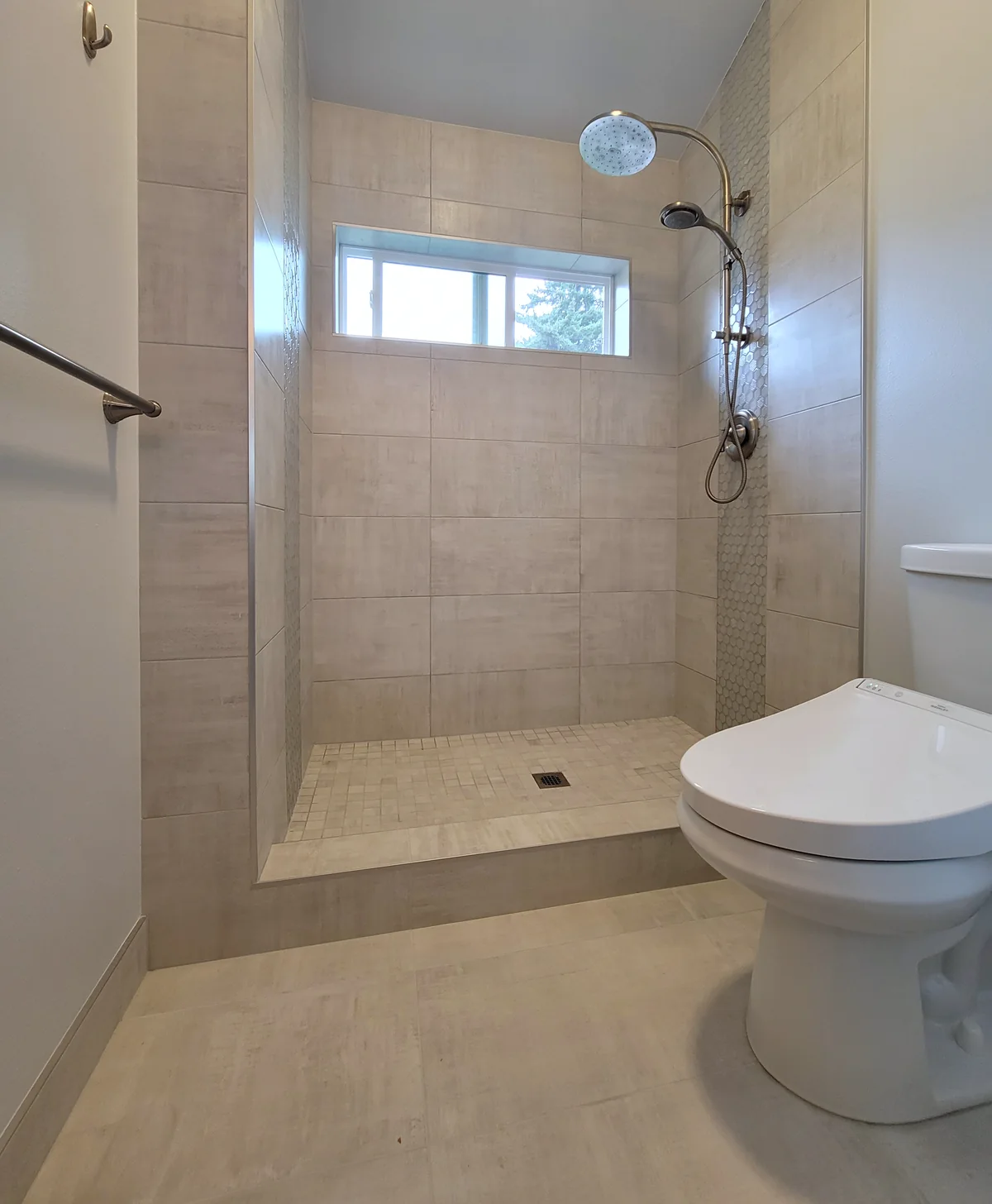
In our Renton shower remodel, the original installation had uneven tile cuts and inconsistent joints. At the ceiling and wall corner, some grout joints were wider than ¼ inch. The finish needed attention, but the reason for rebuilding went deeper than its appearance.
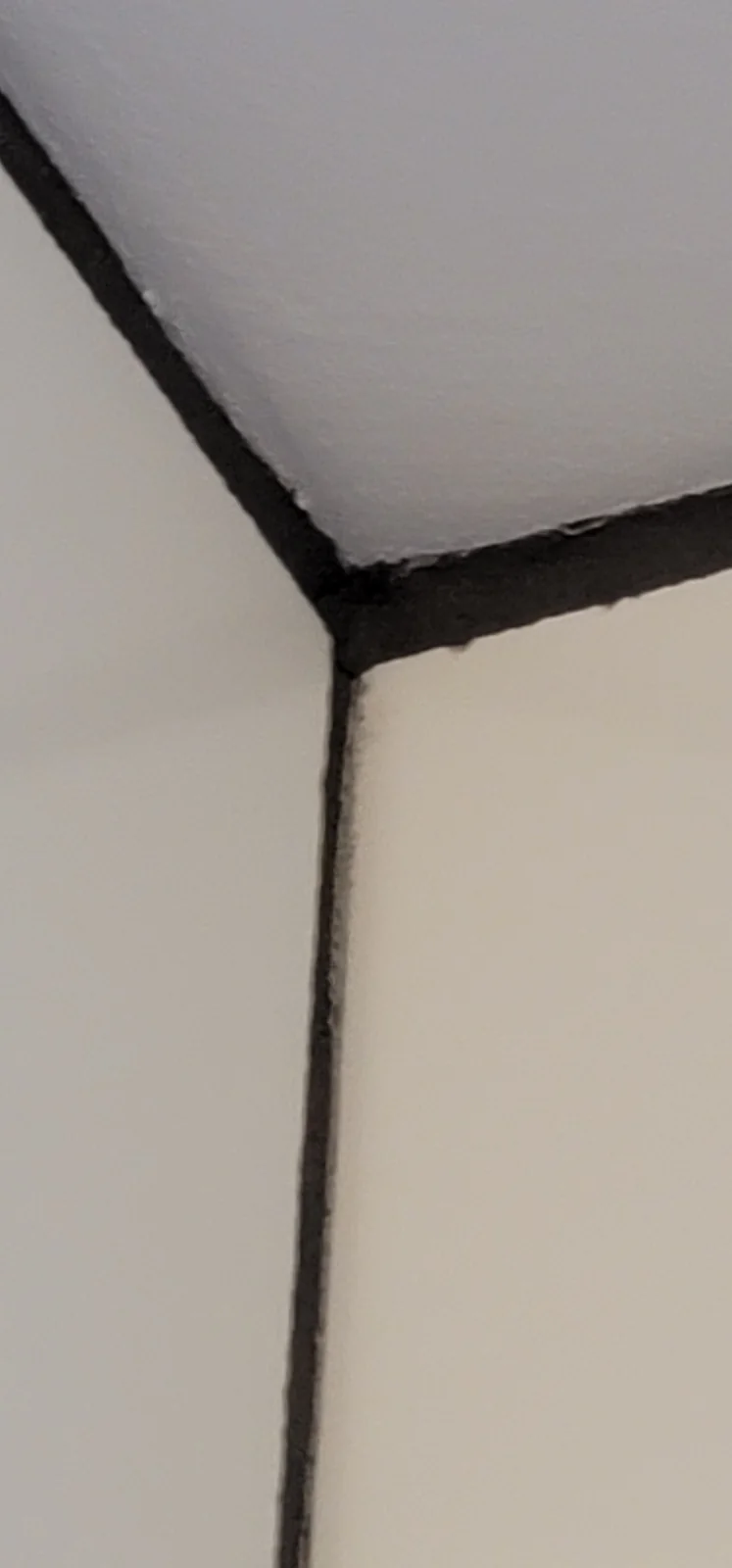
During removal, we found dried thinset ridges where some tiles had not bonded. Poor bonding contributed to the cracking and the decision to rebuild. Adding fresh grout would have changed the appearance of the joints without correcting that problem.
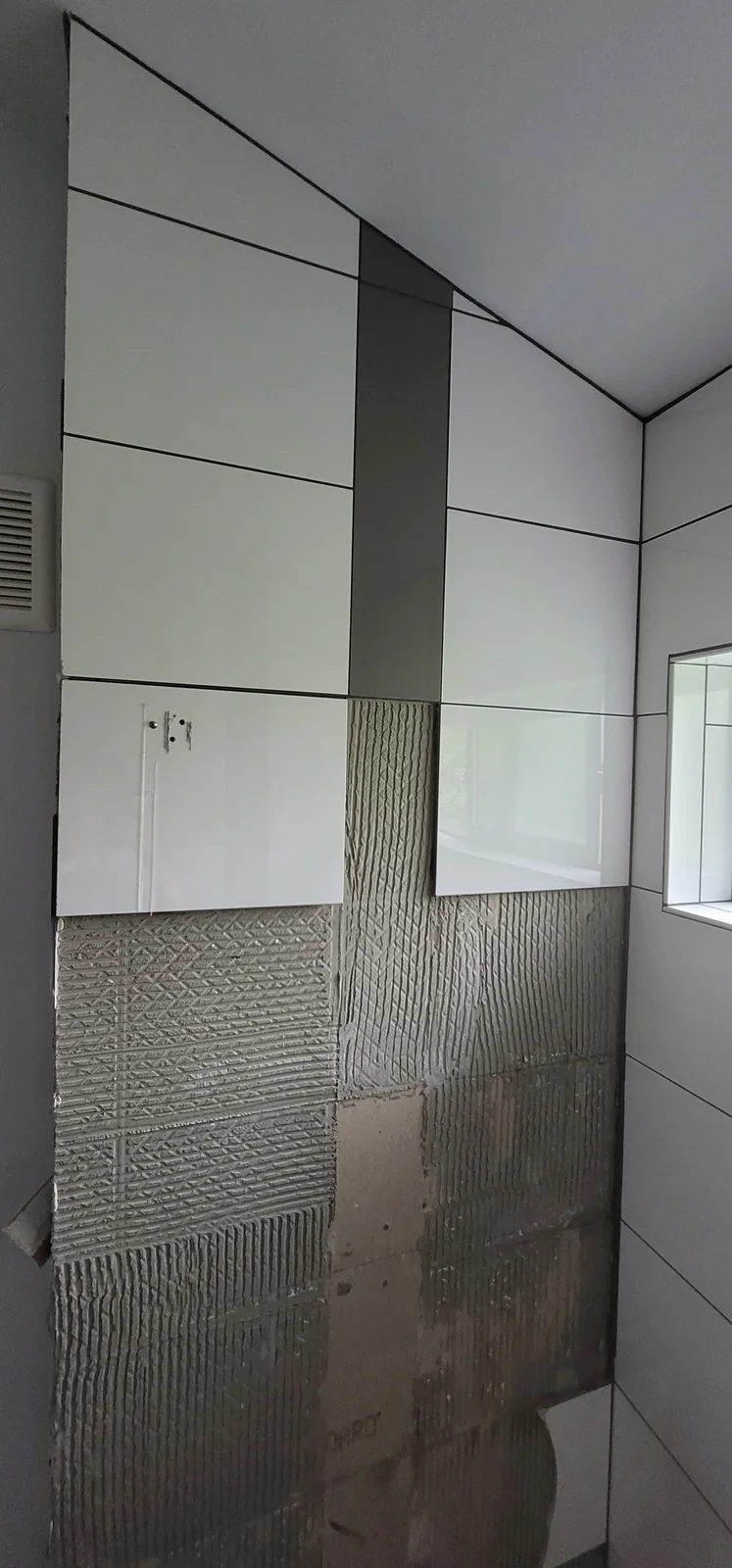
The project photographs show the original conditions, removal and finished shower. They are useful because the visible joints and the concealed bond tell different parts of the story. Joint width alone is not a universal pass-or-fail test; permitted widths vary with the tile and grout. In this shower, the removal evidence explained why a cosmetic repair was insufficient.
05 / Limited repairs
When does regrouting a shower make sense?
Regrouting can be reasonable when damage is limited to grout, the surrounding tile is stable, and there is no evidence pointing to a leaking or deteriorating assembly. The repair should address the identified cause, such as a localized preparation problem, rather than simply cover the crack.
A proper scope includes removing damaged material to the depth required by the replacement grout, cleaning the joints, choosing a compatible product and allowing the specified cure before water exposure. MAPEI’s cracked-grout repair guidance describes removal and preparation before new grout is applied. Spreading a thin layer over existing cracked grout skips that preparation.
At a movement joint, discuss the appropriate sealant or profile detail instead. Do not apply silicone over crumbling grout or an old failed sealant bead. The replacement needs suitable joint preparation, adhesion surfaces and dimensions according to its instructions.
Also ask what happens if removing a tile damages the waterproofing. A local tile replacement is only a complete repair when the backing and water-management detail can remain sound or be restored using a compatible method. A contractor should explain that limitation before promising a small repair.
Shower regrouting after 20 years of use
For one Bellevue homeowner, our work was regrouting a shower after about 20 years of use. The photographs below show the existing mosaic shower floor before and after the regrouting was completed. It is an example of the smaller maintenance projects homeowners may consider before planning a full renovation.
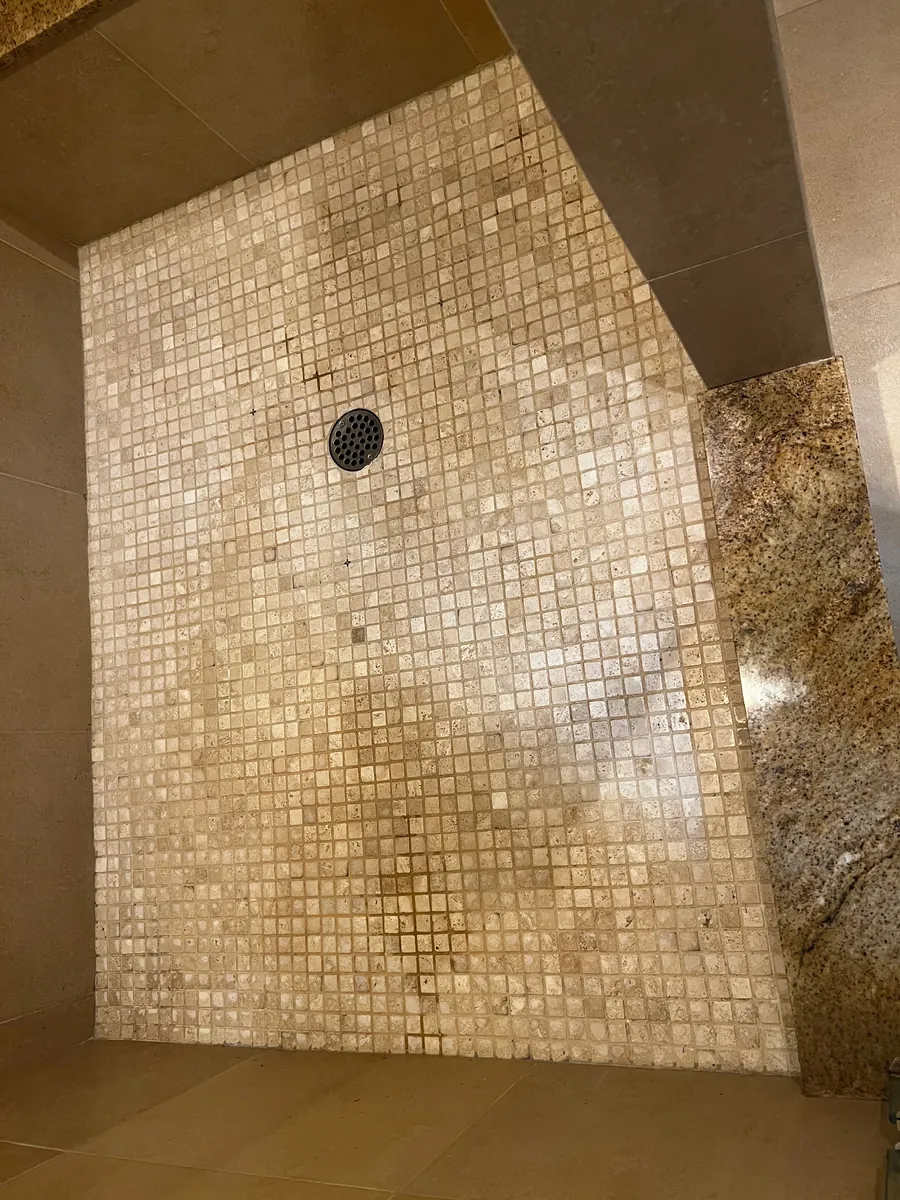
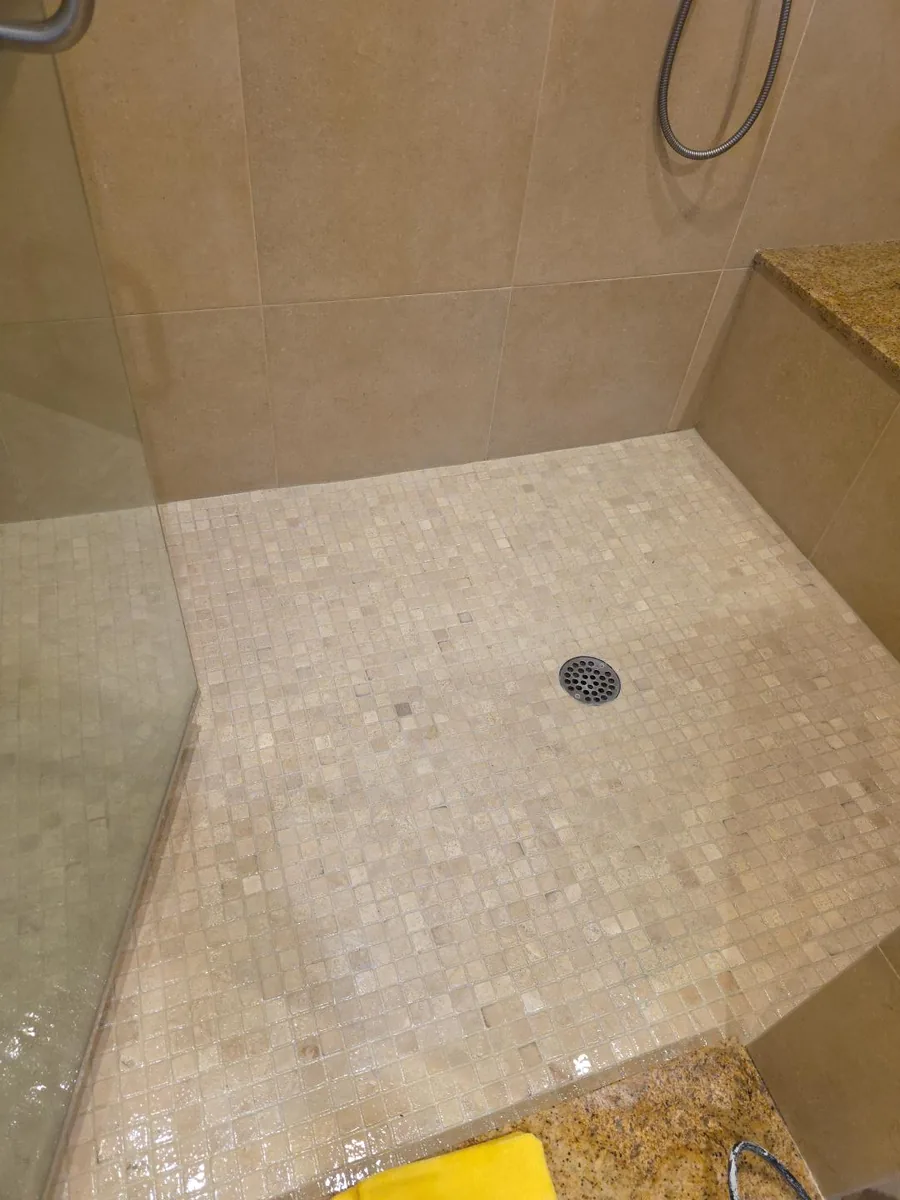
Two years later, the same homeowners hired us for a water-damage restoration project in Bellevue’s Northup area. That project covered the basement rooms, hall, closets and bathrooms.
06 / Knowing the limit
When should you consider rebuilding the shower?
A rebuild becomes worth discussing when failures are widespread, tile is loose in multiple areas, the backing has deteriorated, or the waterproofing cannot be reliably repaired within a small opening. Recurring cracks after previous repairs are another reason to investigate before spending on more grout.
Ask the contractor to show the evidence and separate confirmed findings from conditions that will only be visible after removal. The estimate should identify the opening or demolition scope, what can remain, how concealed damage will be handled, and how the new work will connect to retained materials. A low repair price is difficult to compare with a rebuild until those boundaries are clear.
One damaged tile does not automatically justify replacing an entire bathroom. Depending on the findings, the work may be limited to a joint, a local area or the shower enclosure. The rest of the bathroom can be considered separately.
If a rebuild is needed, use the opportunity to review the tile layout, joint consistency and maintenance needs. Our guide to choosing bathroom tiles explains those finish decisions. They come after the repair scope and assembly have been settled.
07 / Water protection
Does cracked grout mean the shower is leaking?
No. A crack does not prove a leak, and an uncracked tile surface does not prove the shower is waterproof. Tile and grout are the finish over a water-management assembly. Schluter’s shower waterproofing explanation describes why that assembly must manage moisture beneath the tile.
Grout sealer is not a way to bridge a broken shower membrane. Regrouting or replacing a surface joint cannot repair a failed drain connection, damaged liner or missing waterproofing at a penetration. Our bathroom waterproofing guide covers the systems behind the finish.
If water appears in the room below or beside the shower, pause use and have the source checked. Shower plumbing, drain connections, enclosure joints and the tiled assembly are different possible sources. A repair should follow the evidence rather than assume the most visible grout crack explains all the water.
08 / Before accepting a repair
What should you ask a shower repair contractor?
Send photographs of the whole shower as well as the close-up. Include the installation date if known, previous repair dates, whether the crack is growing and whether any water has appeared outside the enclosure. Keep construction photos or product records if you have them.
- What do you believe failed? Ask whether the proposed work addresses grout, a movement joint, tile bond, backing or waterproofing.
- What supports that conclusion? Ask to see the relevant conditions and understand what remains uncertain.
- How will the waterproofing be protected or repaired? This matters when tile or backing will be removed.
- What is included if more damage is uncovered? Establish how additional work will be documented and approved.
- When can the shower be used again? The answer should follow the selected materials and site conditions, not a standard promise for every repair.
For a newly installed shower, document the condition and contact the installer before someone else starts removing material. Keeping that record helps everyone discuss the same problem and proposed remedy.
09 / Homeowner questions
Questions about cracked shower tile and grout
Why is my new shower grout cracking?
Possible causes include grout preparation or curing problems, rigid grout at a movement joint, loose tile or movement in the backing. Photograph the crack and contact the installer before another contractor removes material. The location and underlying condition determine the repair.
Can I put new grout over cracked grout?
A thin layer over damaged grout is not a reliable repair. Failed material must be removed and the joint prepared to the replacement product's requirements. First check that the tile is stable and that the joint actually calls for grout rather than a flexible movement detail.
Should shower corners have grout or silicone?
Changes of plane generally need movement accommodation, typically an appropriate flexible sealant or a purpose-made movement profile. Follow the shower assembly and product requirements. Repeatedly replacing rigid grout in a moving corner leaves the cause unresolved.
Will a cracked shower tile leak?
A cracked tile does not by itself prove a leak. The condition of the waterproofing and its connections matters. Have the crack assessed, and stop using the shower if water appears outside it or surrounding materials are soft or damaged.
Can one cracked shower tile be replaced?
Sometimes, if the damage is localized, the cause is addressed and the surrounding assembly is sound. The repair plan must also protect the waterproofing or explain how it can be restored if removal damages it. Widespread bond failure needs a broader scope.
Does hollow-sounding shower tile need to be removed?
Sound alone is not enough to determine the repair. Consider the assembly, crack pattern, evidence of loose tile and other conditions. Do not pry at tile to test it. An assessment can establish whether local repair or a larger opening is warranted.
Will epoxy grout stop shower tile from cracking?
Changing grout does not secure poorly bonded tile, correct a moving substrate or repair damaged waterproofing. Product selection matters, but it comes after identifying the cause. A movement joint still needs the appropriate detail for the assembly.
How long should I wait to shower after regrouting?
Use the water-exposure cure time specified for the actual grout and any sealant or other repair materials. Temperature and site conditions can affect the schedule. Ask the contractor for the product names and written return-to-use instructions.